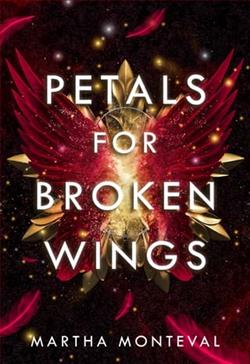
Martha Monteval's Petals for Broken Wings is a breathtaking conclusion to The Panom Saga, a trilogy that has captivated readers with its intricate world-building, complex characters, and the relentless tension between love and power. This final installment is a masterful blend of dark fantasy and romance, weaving together the fates of its characters with the very fabric of their world, Thyria.
The narrative centers around Hope Nevada, the Daughter of Red, and Ciaran Castel, the Son of Darkness. Their journey is one of reclamation and survival, as they face the wrath of the Cardinal Queen and the impending doom of their land. Monteval crafts a story that is as much about the internal struggles of her characters as it is about the external battles they must fight. The theme of destiny versus choice is prevalent throughout the novel, as Hope and Ciaran grapple with their roles in a world that demands sacrifice.
Hope Nevada is a compelling protagonist whose evolution is both poignant and powerful. Initially reluctant to embrace her destiny, she is driven by a fierce determination to protect her homeland. Her journey is one of self-discovery, as she learns to wield her power and navigate the treacherous politics of Thyria. Monteval skillfully portrays Hope's internal conflict, making her a relatable and inspiring character. Her growth is mirrored in the physical journey she undertakes to gather the fragments of a broken heart, a metaphor for her own fractured identity and the healing she must undergo to save her world.
Ciaran Castel, on the other hand, is a character shrouded in mystery and darkness. His allegiance to Hope is unwavering, yet he is constantly battling the shadows that threaten to consume him. Monteval's portrayal of Ciaran is nuanced, exploring the duality of his nature and the choices he must make. His relationship with Hope is central to the narrative, a testament to the novel's exploration of love as both a weapon and a vulnerability. Their bond is tested repeatedly, and Monteval does not shy away from the complexities of their relationship, making it all the more authentic and engaging.
The supporting cast of characters is equally well-developed, each bringing their own strengths and weaknesses to the story. The alliances and rivalries that form add depth to the narrative, highlighting the intricate web of loyalties and betrayals that define the world of Thyria. Monteval's ability to create a diverse and dynamic ensemble is commendable, as each character contributes to the overarching themes of power, sacrifice, and redemption.
Monteval's world-building is nothing short of extraordinary. Thyria is a land teetering on the brink of destruction, its fate intertwined with the magic that courses through it. The imagery of the sangins filling the skies and the land dying is haunting, a vivid representation of the stakes at play. The novel's setting is richly detailed, from the East, West, North, and South Petals to the Core where the heart of Thyria trembles. Monteval's prose is both lyrical and evocative, painting a world that is as beautiful as it is perilous.
The themes of magic and sacrifice are intricately woven into the narrative, challenging the characters to confront the cost of their actions. The novel delves into the brutal arithmetic of power, where every gain comes with a loss. Monteval explores the moral ambiguities of her characters' choices, forcing them to reckon with the consequences of their decisions. This exploration of the ethical dimensions of magic adds a layer of complexity to the story, elevating it beyond a simple tale of good versus evil.
In comparison to other works in the genre, such as The Serpent and the Wings of Night and A Court of Thorns and Roses, Petals for Broken Wings stands out for its intricate character development and the depth of its themes. While it shares the epic scope and romantic elements of these stories, Monteval's novel is distinguished by its focus on the internal struggles of its characters and the moral dilemmas they face. The novel's exploration of love as a force that can both heal and destroy is reminiscent of The Bridge Kingdom, yet Monteval's unique voice and vision make it a standout in the genre.
Overall, Petals for Broken Wings is a fitting conclusion to The Panom Saga, a novel that will resonate with readers long after the final page is turned. Monteval has crafted a story that is both epic and intimate, a testament to the power of love and the resilience of the human spirit. For fans of dark, epic romantic fantasy, this novel is a must-read, offering a rich tapestry of emotion, adventure, and magic that will leave readers spellbound.



