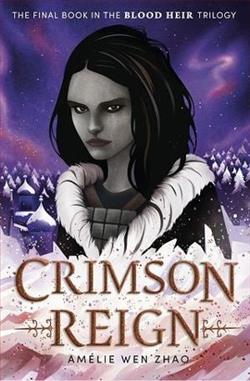
Amélie Wen Zhao’s Crimson Reign is a captivating conclusion to the Blood Heir trilogy, weaving a tale of power, identity, and resilience. This epic fantasy, inspired by the story of Anastasia, delves into the complexities of leadership and the burdens of legacy. With its intricate plot and rich character development, Zhao crafts a narrative that is both thrilling and thought-provoking.
At the heart of Crimson Reign is Ana Mikhailov, the Red Tigress, whose journey from a princess with a dark secret to a leader fighting for her empire is both compelling and poignant. Ana’s character development is one of the novel’s strongest elements. Stripped of her Affinity to blood, Ana is forced to confront her identity and her worth beyond her powers. This loss becomes a catalyst for her growth, pushing her to rely on her wit, courage, and the strength of her convictions. Zhao expertly portrays Ana’s internal struggle, making her a relatable and inspiring protagonist.
The novel’s antagonist, Empress Morganya, is equally well-crafted. Her reign of terror and her quest for power are chillingly depicted, creating a palpable sense of tension throughout the story. Morganya’s possession of the Bregonian siphon, a weapon capable of stealing Affinities, raises the stakes and adds a layer of urgency to Ana’s mission. Zhao’s portrayal of Morganya as a complex villain, driven by her own fears and desires, adds depth to the narrative and challenges the reader to consider the fine line between heroism and tyranny.
The themes of power and identity are intricately woven into the fabric of Crimson Reign. Ana’s struggle to reclaim her throne and her identity is mirrored by the broader conflict between Affinites and non-Affinites in Cyrilia. Zhao explores the dynamics of power and oppression, highlighting the ways in which fear and prejudice can divide a nation. The alliance between Ana and the Cyrilian rebel group, the Red Cloaks, underscores the importance of unity and collaboration in the face of tyranny. However, the fraying of this alliance also serves as a reminder of the challenges inherent in maintaining solidarity amidst differing agendas and personal ambitions.
One of the novel’s most striking aspects is its exploration of the concept of legacy. Ana’s journey is not just about reclaiming her throne, but also about redefining what it means to be a leader. Zhao challenges the traditional notions of power and authority, suggesting that true leadership lies in empathy, understanding, and the ability to inspire others. Ana’s interactions with her allies and her enemies alike reveal the complexities of leadership and the sacrifices it demands.
Zhao’s world-building is another highlight of Crimson Reign. The richly detailed setting of Cyrilia, with its diverse cultures and intricate political landscape, provides a vivid backdrop for the unfolding drama. The author’s attention to detail and her ability to create a sense of place enhance the immersive quality of the narrative, drawing the reader into the heart of the conflict.
In terms of pacing, Crimson Reign strikes a balance between action and introspection. The novel’s thrilling battle scenes and strategic maneuvers are interspersed with moments of reflection and character development, allowing the reader to fully engage with the story on both an emotional and intellectual level. Zhao’s prose is both elegant and evocative, capturing the intensity of the characters’ emotions and the high stakes of their quest.
Comparatively, Crimson Reign shares thematic similarities with other epic fantasies such as Leigh Bardugo’s Shadow and Bone series and Sabaa Tahir’s An Ember in the Ashes. Like Bardugo and Tahir, Zhao explores themes of power, identity, and resistance, while also crafting a unique narrative that stands on its own. The novel’s focus on a strong female protagonist and its exploration of complex moral dilemmas align it with the works of these authors, yet Zhao’s distinct voice and imaginative world-building set Crimson Reign apart.
Overall, Crimson Reign is a powerful and satisfying conclusion to the Blood Heir trilogy. Amélie Wen Zhao has crafted a story that is both epic in scope and deeply personal, exploring the intricacies of power, identity, and legacy with nuance and insight. The novel’s compelling characters, intricate plot, and richly imagined world make it a must-read for fans of epic fantasy and anyone seeking a story that challenges and inspires. As Ana Mikhailov faces her destiny, readers are left with a resonant message about the power of resilience and the enduring strength of the human spirit.



