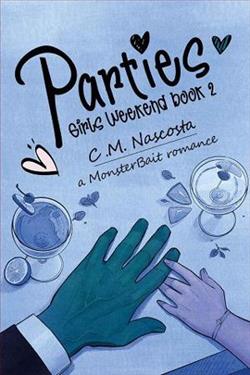
C.M. Nascosta's Parties is a captivating exploration of identity, love, and societal expectations, set against the backdrop of a fantastical world where elves and orcs navigate the complexities of multi-species relationships. The novel delves into the lives of three suburban elves—Lurielle, Ris, and Silva—each grappling with personal dilemmas that challenge their understanding of love and self-identity.
At its core, Parties is a multi-POV narrative that intricately weaves the individual stories of these three women, each attending a series of soirees that serve as pivotal moments in their personal journeys. The book's structure allows readers to immerse themselves in the distinct yet interconnected lives of Lurielle, Ris, and Silva, offering a rich tapestry of emotions and experiences.
Lurielle's story is a poignant examination of the challenges inherent in a multi-species relationship. Her romance with Khash, an orc, is fraught with societal pressures and familial expectations. Nascosta skillfully portrays Lurielle's internal conflict as she navigates the complexities of introducing Khash to her family and meeting his. The narrative raises important questions about the sacrifices and compromises required in relationships that defy societal norms. Lurielle's journey is a testament to the courage it takes to pursue love in the face of adversity, and her character development is both compelling and relatable.
Ris's narrative offers a refreshing take on the theme of freedom versus attachment. Her spontaneous return to the resort and subsequent encounter with Ainsley, a character who embodies both allure and detachment, challenges her desire for independence. Nascosta deftly explores the tension between Ris's yearning for freedom and the undeniable pull of a connection that defies her expectations. The dynamic between Ris and Ainsley is electric, and their interactions are imbued with a sense of realism that makes their story both engaging and thought-provoking.
Silva's storyline is perhaps the most complex, as it delves into the duality of her existence. By day, Silva is burdened by the expectations of her family and the rigid norms of Elvish society. By night, she embraces a life of freedom and passion, secretly seeing Tate, a man with his own hidden depths. Nascosta masterfully captures Silva's internal struggle as she balances these two worlds, ultimately forcing her to confront the difficult choice between a life of privilege and the pursuit of true love. Silva's character arc is a powerful exploration of identity and the courage it takes to forge one's own path.
The novel's setting, a fantastical world where elves and orcs coexist, adds an intriguing layer to the narrative. Nascosta's world-building is subtle yet effective, providing a backdrop that enhances the themes of diversity and acceptance. The societal dynamics and prejudices faced by the characters mirror real-world issues, making the story resonate on a deeper level.
One of the standout aspects of Parties is Nascosta's ability to create multi-dimensional characters who are both flawed and endearing. The author excels in portraying the intricacies of human (and non-human) emotions, allowing readers to empathize with the characters' struggles and triumphs. The dialogue is sharp and authentic, capturing the nuances of each character's voice and enhancing the overall narrative.
In comparison to other works in the genre, Parties stands out for its focus on character-driven storytelling and its exploration of themes that transcend the boundaries of fantasy. While it shares similarities with novels like Sarah J. Maas's A Court of Thorns and Roses series in terms of its exploration of romance and societal expectations, Nascosta's work is distinguished by its emphasis on the internal conflicts faced by its protagonists. The novel's multi-POV structure also sets it apart, offering a more comprehensive view of the characters' journeys.
Overall, Parties is a beautifully crafted novel that combines elements of fantasy, romance, and social commentary. C.M. Nascosta has created a world that is both enchanting and thought-provoking, populated by characters who are as relatable as they are extraordinary. The book's exploration of love, identity, and societal norms is both timely and timeless, making it a must-read for fans of character-driven fantasy.
In conclusion, Parties is a testament to the power of storytelling to illuminate the complexities of the human experience, even in a world inhabited by elves and orcs. Nascosta's novel is a celebration of diversity, love, and the courage to defy expectations, leaving readers with much to ponder long after the final page is turned.



