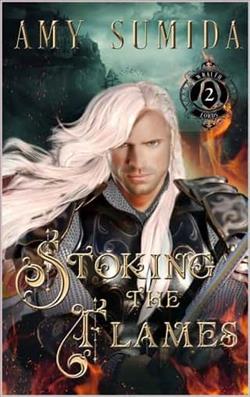
Amy Sumida's Stoking the Flames is a compelling addition to the fantasy genre, weaving together themes of love, destiny, and the eternal struggle between good and evil. Set against the backdrop of the war-torn planet of Varr, the narrative explores the complexities of human emotions and the burdens of prophecy. Sumida's storytelling is both imaginative and engaging, drawing readers into a world where magic and immortality are not just fantastical elements but integral parts of the characters' identities and destinies.
At the heart of the story is the protagonist, a unique human who defies the norms of her kind. Unlike other humans on Varr, she possesses magic, making her immune to the Corrupter's Death Magic—a formidable force that enslaves humans and turns them into soldiers against the immortal races. This immunity, coupled with her newfound immortality, sets her apart as a beacon of hope in a world overshadowed by darkness. Her journey is not just one of self-discovery but also of fulfilling a destiny that requires her to unite and empower the Wraith Lords, magical warriors destined to combat the Corrupter.
The central theme of Stoking the Flames revolves around the power of love and its transformative potential. The protagonist's ability to magnify the Wraith Lords' magic hinges on her capacity to fall in love. This aspect of the narrative is both intriguing and challenging, as it subverts the traditional notion of love as a spontaneous and personal emotion. Instead, love becomes a strategic tool, a means to an end in the battle against evil. Sumida deftly explores the tension between the protagonist's personal desires and the expectations placed upon her by the Emperor, the Goddess, and the Wraith Lords. This tension is palpable and adds depth to the protagonist's character, making her relatable and human despite her extraordinary abilities.
Character development is one of the novel's strengths. The protagonist is a well-rounded character, grappling with the weight of her responsibilities and the complexities of her emotions. Her relationships with her two boyfriends, whom she loves dearly, are portrayed with sensitivity and nuance. These relationships are not just romantic entanglements but are central to the narrative's progression. The protagonist's struggle to balance her personal feelings with the demands of her destiny is a recurring motif, highlighting the sacrifices required in the pursuit of a greater good.
The supporting characters, particularly the Wraith Lords, are also well-developed, each with their own distinct personalities and motivations. Their willingness to share the protagonist in the name of ending the war adds an interesting dynamic to the story, challenging conventional notions of love and partnership. This aspect of the narrative is reminiscent of other fantasy works that explore polyamorous relationships, such as Laurell K. Hamilton's Anita Blake series, where love and power are intricately intertwined.
Sumida's world-building is another highlight of the novel. The planet of Varr is vividly depicted, with its war-torn landscapes and the looming threat of the Corrupter's Death Magic. The author skillfully creates a sense of urgency and danger, immersing readers in a world where the stakes are high and the future is uncertain. The magical elements are seamlessly integrated into the narrative, enhancing the story's fantastical appeal without overshadowing the characters' emotional journeys.
However, the novel is not without its flaws. The pressure placed on the protagonist to fall in love repeatedly can feel contrived at times, detracting from the authenticity of her emotions. While the narrative acknowledges the difficulty of falling in love on command, the repeated emphasis on this aspect can become repetitive, potentially alienating readers who prefer more organic character development. Additionally, the pacing of the story may feel uneven to some, with moments of intense action interspersed with slower, introspective passages.
Despite these minor shortcomings, Stoking the Flames is a captivating read that offers a fresh take on the fantasy genre. Sumida's exploration of love as a powerful force for change is both thought-provoking and emotionally resonant. The novel's themes of destiny, sacrifice, and the struggle against evil are timeless, appealing to readers who enjoy stories that delve into the complexities of the human condition.
In conclusion, Amy Sumida's Stoking the Flames is a richly imagined tale that combines elements of fantasy, romance, and adventure. Its exploration of love as a strategic tool in the fight against darkness sets it apart from other works in the genre, offering readers a unique and engaging narrative experience. Fans of fantasy literature, particularly those who appreciate stories with strong female protagonists and intricate world-building, will find much to enjoy in this novel. While it may not be without its imperfections, Stoking the Flames is a testament to the enduring power of love and the indomitable spirit of those who dare to defy fate.



