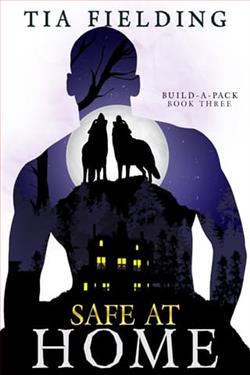
Tia Fielding's Safe at Home is a compelling exploration of healing, identity, and the intricate dynamics of found family. Set against the backdrop of a supernatural world where werewolves and vampires coexist, the novel delves into the lives of Max and Ben Douglas, two brothers who have endured a tumultuous past and are now on a journey towards recovery and self-discovery.
At its core, Safe at Home is a story about resilience and the power of music and relationships to heal deep-seated wounds. Max Douglas, the protagonist, is a character who has faced significant adversity. His struggle with addiction is portrayed with sensitivity and depth, offering readers a nuanced look at the challenges of overcoming such a personal battle. The music of the band Kaiju serves as a lifeline for Max, a theme that resonates with anyone who has found solace in art during difficult times.
The relationship between Max and his brother Ben is one of the novel's most compelling aspects. Despite the mere year that separates them, Ben has always assumed the role of the protective older brother. Their bond is portrayed with authenticity and warmth, highlighting the importance of sibling relationships in navigating life's challenges. Fielding does an excellent job of illustrating how their shared history and mutual understanding create a foundation of support and love that is crucial for both characters' growth.
The introduction of Brodie, their cousin and new alpha, marks a turning point in the narrative. Brodie's leadership brings a sense of stability and hope to the pack, and his decision to take over from their abusive father is a pivotal moment that sets the stage for the brothers' healing journey. Brodie's character is a refreshing take on the alpha trope, as he embodies compassion and strength without resorting to authoritarianism. His friendship with Rian, a vampire, further enriches the story, adding layers to the pack's dynamics and challenging traditional notions of pack hierarchy.
Rian's presence in the household introduces an intriguing element of diversity and acceptance. As a vampire living among werewolves, Rian represents the breaking down of barriers and the potential for unity among different supernatural beings. His friendship with the brothers, particularly Max, is portrayed with warmth and sincerity, and his connection to Luca Moretti, the lead singer of Kaiju, serves as a catalyst for the unfolding drama.
Luca's arrival at the pack's home is a turning point in the narrative. As a former human turned vampire, Luca is grappling with his own identity crisis. The disbandment of Kaiju and his subsequent transformation force him to reevaluate his life and priorities. Fielding skillfully navigates Luca's internal conflict, capturing the essence of a man caught between two worlds. His interactions with Max and Ben are charged with tension and chemistry, adding a layer of romantic intrigue to the story.
The novel's exploration of a polyamorous relationship between Max, Ben, and Luca is handled with care and respect. Fielding challenges conventional norms by presenting a relationship that defies traditional boundaries, emphasizing the importance of communication and consent. The dynamics between the three characters are complex and multifaceted, reflecting the challenges and rewards of navigating such a relationship.
One of the novel's strengths lies in its ability to balance the supernatural elements with the emotional depth of its characters. Fielding's world-building is immersive, creating a setting that feels both fantastical and grounded. The threat to the pack, while ever-present, serves as a backdrop to the personal journeys of the characters, allowing their development to take center stage.
In comparison to other works in the genre, Safe at Home stands out for its focus on healing and personal growth. While many supernatural romances prioritize action and suspense, Fielding's novel is a character-driven narrative that prioritizes emotional depth and authenticity. Fans of authors like K.J. Charles and Jordan L. Hawk, who also blend romance with supernatural elements, will find much to appreciate in Fielding's approach.
Overall, Safe at Home is a poignant and thought-provoking read that offers a fresh perspective on the supernatural romance genre. Tia Fielding's ability to weave together themes of healing, identity, and love in a supernatural setting is a testament to her skill as a storyteller. The novel's exploration of complex relationships and its emphasis on the power of found family make it a standout addition to the genre, appealing to readers who crave depth and authenticity in their romantic narratives.



