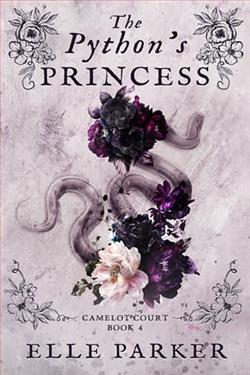
Elle Parker's The Python’s Princess is the fourth installment in a captivating five-book series that reimagines the legendary tales of King Arthur in a modern-day setting. This novel, while rooted in the rich lore of Camelot, offers a fresh perspective by weaving contemporary themes of love, freedom, and self-discovery into its narrative tapestry. The book is not a fantasy romance in the traditional sense, but rather a complex exploration of relationships and personal growth, set against the backdrop of a world filled with secrets and challenges.
At the heart of The Python’s Princess is the protagonist, Quinn, who finds herself embroiled in The Quest, an annual competition that promises the ultimate prize: freedom. This quest is not just a physical challenge but a metaphorical journey that tests the limits of trust, honor, and courage. The narrative is driven by Quinn's determination to navigate the intricate web of alliances and enmities within Camelot Court, a place where nothing is as it seems.
One of the most compelling aspects of the novel is its character development. Quinn is a multifaceted character whose strength and vulnerability are portrayed with remarkable depth. Her journey is not just about winning The Quest but also about understanding herself and the people around her. The presence of multiple love interests adds layers to her character, challenging her to redefine what it means to love and be loved without limits. This exploration of polyamory is handled with sensitivity and nuance, making it a standout feature of the book.
The three men in Quinn's life are equally well-developed, each bringing their own complexities and secrets to the story. Their interactions with Quinn and with each other are fraught with tension and tenderness, reflecting the broader themes of trust and betrayal that permeate the novel. The dynamics between these characters are reminiscent of the intricate relationships found in Arthurian legends, yet they are grounded in modern sensibilities, making them relatable to contemporary readers.
The setting of Camelot Court is richly imagined, with its medieval depths and modern-day challenges creating a unique atmosphere that is both familiar and otherworldly. Parker's skillful world-building is evident in the way she layers aspects of Arthurian lore throughout the series, providing a backdrop that enhances the narrative without overshadowing the characters' personal journeys. The court is a place of intrigue and danger, where allies and threats are often indistinguishable, and the stakes are high.
The novel's themes are both timeless and timely. The quest for freedom, the struggle to protect what is dear, and the courage to confront one's fate are universal themes that resonate deeply. Parker's exploration of these themes is both thought-provoking and emotionally engaging, inviting readers to reflect on their own lives and choices. The book's emphasis on living and loving without limits challenges conventional notions of relationships and identity, encouraging readers to embrace a more expansive view of love and connection.
One of the most intriguing elements of The Python’s Princess is its use of a cliffhanger ending. This narrative choice heightens the tension and leaves readers eagerly anticipating the next installment. While some may find the lack of resolution frustrating, it is a testament to Parker's ability to craft a story that keeps readers invested in the characters and their fates. The cliffhanger serves as a reminder that the journey is far from over and that the choices made in this installment will have lasting consequences.
In comparison to other modern retellings of Arthurian legends, such as those by authors like T.H. White or Marion Zimmer Bradley, Parker's approach is refreshingly contemporary. While White's The Once and Future King and Bradley's The Mists of Avalon offer their own unique takes on the legend, Parker's series stands out for its focus on personal agency and the fluidity of love and identity. Her characters are not bound by the rigid roles often found in traditional retellings, allowing for a more inclusive and diverse exploration of the legend.
Overall, The Python’s Princess is a compelling addition to Elle Parker's series, offering a rich blend of adventure, romance, and introspection. Its modern-day retelling of the King Arthur legend is both innovative and respectful of its source material, providing a fresh perspective that will appeal to fans of the genre and newcomers alike. With its well-drawn characters, intricate plot, and thought-provoking themes, this novel is sure to leave a lasting impression on readers and keep them eagerly awaiting the final installment.
For those seeking a story that challenges conventions and explores the depths of human connection, The Python’s Princess is a must-read. Its blend of myth and modernity, coupled with its emphasis on living and loving without limits, makes it a standout in the realm of contemporary retellings. As Quinn's journey continues, readers will find themselves drawn into a world where the past and present collide, and where the choices made today will shape the future of Camelot Court.



