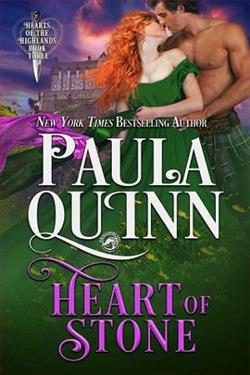
Paula Quinn’s Heart of Stone is a compelling historical romance that delves into themes of love, redemption, and the enduring power of the past. Set against the backdrop of a tumultuous Scotland, the novel weaves a tale of two souls who must navigate the complexities of their shared history and the scars it has left behind. With its richly drawn characters and emotionally charged narrative, this book is a testament to Quinn's ability to craft a story that resonates deeply with readers.
At the heart of the novel is the relationship between Nicholas MacPherson, the Earl of Rothbury, and Julianna Feathers. Nicholas, a man burdened by the weight of his past, returns from a pilgrimage only to find himself confronted by the very woman he once loved. Julianna, on the other hand, is a woman who has faced her own share of hardships and emerges stronger, determined to reclaim the love she once lost. The dynamic between these two characters is both complex and engaging, as they grapple with their past and the possibility of a future together.
One of the most striking aspects of Heart of Stone is its exploration of the theme of redemption. Nicholas, who has adopted the name William Stone, is a man who has been shaped by his experiences and is initially resistant to the idea of love. His journey is one of self-discovery, as he learns to trust and open his heart once more. Julianna, in contrast, is a beacon of hope and resilience. Her determination to help Nicholas find his way out of the emotional rubble is both inspiring and heartwarming. Through their interactions, Quinn masterfully illustrates the transformative power of love and the possibility of healing even the deepest wounds.
The character development in this novel is particularly noteworthy. Nicholas is a multifaceted character whose internal struggles are portrayed with depth and nuance. His reluctance to embrace love is rooted in a fear of vulnerability, a theme that is skillfully explored throughout the narrative. Julianna, meanwhile, is a strong and determined heroine who refuses to be defined by her past. Her growth from a privileged young woman to a resilient survivor is both believable and empowering. Together, they create a dynamic that is both compelling and relatable, drawing readers into their world and making them invested in their journey.
Quinn’s writing is both evocative and immersive, transporting readers to a time and place where love and loyalty are tested by external forces. The historical setting is richly detailed, providing a vivid backdrop for the unfolding drama. The author’s attention to detail and her ability to create a sense of place add depth to the narrative, making the story come alive in the reader’s mind.
In terms of its overall impact, Heart of Stone is a story that lingers long after the final page is turned. It is a tale of love that transcends time and circumstance, a reminder that the heart is capable of great resilience and strength. The emotional depth of the story, combined with its well-drawn characters and engaging plot, makes it a standout in the genre of historical romance.
When compared to other works in the genre, such as Diana Gabaldon’s Outlander series or Julie Garwood’s The Bride, Quinn’s novel holds its own with its unique blend of romance and historical intrigue. Like Gabaldon, Quinn has a knack for creating complex characters and weaving them into a richly detailed historical tapestry. However, Heart of Stone distinguishes itself with its focus on the themes of redemption and the enduring power of love, offering a fresh perspective within the genre.
In conclusion, Paula Quinn’s Heart of Stone is a beautifully crafted tale that explores the complexities of love and the possibility of redemption. With its richly drawn characters, evocative setting, and emotionally resonant narrative, it is a novel that will captivate readers and leave them yearning for more. Whether you are a fan of historical romance or simply looking for a story that speaks to the heart, Heart of Stone is a book that should not be missed.



