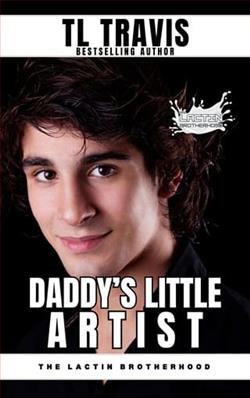
T.L. Travis's Daddy's Little Artist is a poignant exploration of love, creativity, and the complexities of self-expression. Set against the backdrop of a unique relationship dynamic, this novel delves into the intricacies of a bond that transcends conventional boundaries, offering readers a glimpse into a world where love is both nurturing and liberating.
At the heart of the story is the relationship between Chuck and Tae, a couple whose connection is as profound as it is unconventional. Chuck, the quintessential caretaker, embodies the role of a "Daddy" in their relationship, providing not only emotional support but also a sense of stability and security for Tae. This dynamic is central to the narrative, as it underscores the themes of dependency and autonomy that Travis skillfully weaves throughout the book.
Tae, the titular "Little Artist," is a character whose struggles with creativity form the crux of the story. His journey is one of self-discovery, as he grapples with the pressure of living up to his own artistic potential. The novel poignantly captures Tae's internal conflict, as he finds himself unable to translate his vibrant imagination onto the canvas of his own space. This struggle is not merely about artistic block; it is a metaphor for the broader challenges of self-identity and personal fulfillment.
Travis's portrayal of Tae's creative paralysis is both relatable and deeply moving. Many readers will find resonance in Tae's experience of feeling "lost and desperate," a sentiment that is universal in its depiction of the human condition. The author deftly captures the frustration of having a "kaleidoscope of ideas" yet being unable to bring them to fruition, a plight that will strike a chord with anyone who has ever faced a similar creative impasse.
The novel's exploration of the relationship between Chuck and Tae is both tender and nuanced. Chuck's desire to "fix" whatever is troubling Tae is emblematic of his nurturing nature, yet it also highlights the limitations of even the most well-intentioned love. This dynamic raises important questions about the balance between support and autonomy in relationships, and the extent to which one can truly help another in their personal journey.
One of the standout aspects of Daddy's Little Artist is its inclusion in The Lactin Brotherhood series, which introduces a fascinating element of men who naturally lactate. This unique premise adds an additional layer of depth to the story, challenging traditional notions of masculinity and caregiving. The series' exploration of such themes is reminiscent of works by authors like K.C. Wells and Susi Hawke, who similarly delve into unconventional relationship dynamics with sensitivity and insight.
Travis's writing is both evocative and engaging, drawing readers into the emotional landscape of the characters with ease. The dialogue is authentic and heartfelt, capturing the nuances of Chuck and Tae's relationship with precision. The author’s ability to convey complex emotions through simple yet powerful prose is a testament to her skill as a storyteller.
In terms of character development, both Chuck and Tae are well-rounded and compelling. Chuck's unwavering support and patience are beautifully contrasted with Tae's vulnerability and artistic angst. Their interactions are imbued with a sense of genuine affection and understanding, making their journey all the more impactful.
Ultimately, Daddy's Little Artist is a story about finding one's voice and the courage to express it. It is about the power of love to heal and inspire, and the importance of creating a space where one can truly be oneself. Travis has crafted a narrative that is both intimate and universal, offering readers a story that is as much about art as it is about the art of living.
For those who appreciate stories that challenge conventional norms and explore the depths of human connection, Daddy's Little Artist is a must-read. It is a testament to the transformative power of love and creativity, and a reminder that sometimes, the greatest masterpieces are those we create within ourselves.



