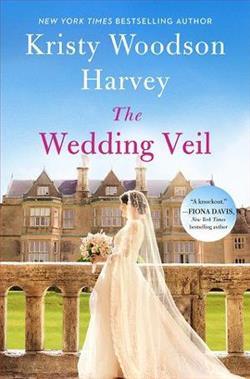
Kristy Woodson Harvey’s The Wedding Veil is a captivating exploration of familial bonds, legacy, and the intricate dance between tradition and modernity. With her characteristic blend of wit, charm, and emotional depth, Harvey crafts a narrative that spans generations, weaving together the lives of four women connected by a singular, symbolic heirloom—a wedding veil. This novel is not just a story about a piece of fabric; it’s a profound meditation on the ties that bind us and the secrets that shape our destinies.
The novel opens in the present day with Julia Baxter, a bride on the brink of a life-altering decision. The wedding veil, a family heirloom passed down from her great-grandmother, is supposed to be a talisman of marital bliss. However, Julia’s growing doubts about her impending marriage lead her to question the very foundation of her life. Her impulsive escape to the Virgin Islands is a quest for clarity, a journey that resonates with anyone who has ever felt trapped by the weight of expectations. Harvey’s portrayal of Julia is both relatable and poignant, capturing the universal struggle between duty and desire.
Parallel to Julia’s story is that of her grandmother, Babs, who is navigating her own crossroads. Recently widowed, Babs is grappling with the loss of her husband and the daunting prospect of starting anew in a retirement community. Her unexpected reunion with an old flame adds layers of complexity to her emotional landscape, forcing her to confront unresolved feelings from her past. Harvey’s depiction of Babs is a testament to her skill in crafting multidimensional characters. Babs is not merely a supporting character; she is a fully realized individual whose journey is as compelling as Julia’s.
In a seamless transition, the narrative shifts to 1914, where we meet Edith Vanderbilt, a woman of remarkable resilience and grace. Following the death of her husband, Edith is left to manage the sprawling Biltmore Estate and the community that depends on it. Her determination to preserve the Vanderbilt legacy while preparing her daughter, Cornelia, for the future is both inspiring and heart-wrenching. Edith’s story is a vivid portrayal of the challenges faced by women in positions of power during a time when societal norms were rigidly defined. Harvey’s meticulous attention to historical detail enriches the narrative, providing a backdrop that is as lush and intricate as the Biltmore Estate itself.
Cornelia Vanderbilt, Edith’s daughter, embodies the tension between tradition and progress. Her desire to explore the world beyond the confines of Biltmore is emblematic of the broader cultural shifts occurring in the early 20th century. Cornelia’s internal conflict is rendered with sensitivity and nuance, capturing the essence of a young woman torn between familial duty and personal ambition. Harvey’s exploration of Cornelia’s character adds depth to the novel, highlighting the generational differences in how women perceive their roles and responsibilities.
One of the most striking aspects of The Wedding Veil is its exploration of the concept of legacy. The wedding veil serves as a powerful symbol of continuity, linking the lives of these women across time and space. It is a reminder of the enduring impact of our choices and the ways in which our ancestors’ decisions reverberate through the generations. Harvey’s narrative invites readers to reflect on their own family histories and the heirlooms—both tangible and intangible—that shape their identities.
Harvey’s prose is both elegant and accessible, drawing readers into the world of her characters with ease. Her ability to balance multiple storylines and time periods is commendable, creating a tapestry of interconnected lives that is both intricate and cohesive. The novel’s pacing is well-calibrated, allowing each character’s story to unfold organically while maintaining a sense of momentum.
In comparison to other works in the genre, The Wedding Veil stands out for its rich character development and thematic depth. Fans of Kate Morton’s The Forgotten Garden or Beatriz Williams’ The Summer Wives will find much to admire in Harvey’s novel. Like Morton and Williams, Harvey excels at crafting narratives that blend historical intrigue with contemporary relevance, creating stories that resonate on multiple levels.
Overall, The Wedding Veil is a beautifully crafted novel that explores the complexities of love, loss, and legacy with grace and insight. Kristy Woodson Harvey has delivered a story that is both timeless and timely, a testament to the enduring power of family and the choices that define us. Whether you are drawn to historical fiction, family sagas, or stories of personal transformation, this novel offers something for everyone. It is a reminder that, like the wedding veil itself, our lives are woven together by the threads of those who came before us, creating a tapestry that is as unique and enduring as the bonds we share.



