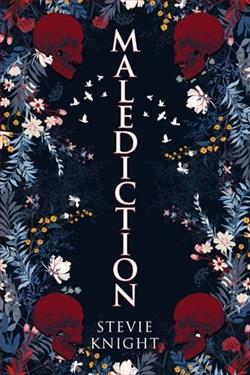
Stevie Knight's Malediction is a captivating exploration of the supernatural, seamlessly blending elements of horror, romance, and suspense into a narrative that challenges the boundaries between reality and myth. At its core, the novel is a compelling character study of Quincey Sterling, a protagonist whose skepticism about the paranormal is as deeply ingrained as her academic pursuits in Ancient History and Occult Sciences. Knight crafts a world where the line between the known and the unknown is tantalizingly blurred, inviting readers to question their own beliefs about the supernatural.
Quincey Sterling is a refreshingly grounded character, whose cynicism about the supernatural is rooted in her logical and analytical mindset. Her background as the granddaughter of a mortician adds a unique layer to her character, providing her with a pragmatic view of life and death. This skepticism is put to the test when she encounters an ancient spell book on Halloween—a night already steeped in mystery and superstition. The decision to engage with the spell book is portrayed not as a reckless act, but as a moment of curiosity and seasonal indulgence, which makes her subsequent entanglement with the supernatural all the more believable and relatable.
The introduction of the "monster worse than nightmares" is a pivotal moment in the narrative, serving as both a catalyst for Quincey's transformation and a symbol of the unknown forces that challenge her worldview. Knight's depiction of this creature is both terrifying and intriguing, a testament to her ability to create complex and multifaceted characters. The relationship that develops between Quincey and this entity is central to the novel, evolving from one of fear and obligation to a deeper, more nuanced connection. This dynamic is reminiscent of the works of authors like Anne Rice, who similarly explore the interplay between humans and supernatural beings, though Knight's approach is distinctly her own.
One of the most compelling aspects of Malediction is its exploration of themes such as belief, trust, and the nature of reality. Quincey's journey from skepticism to acceptance is mirrored by the novel's broader examination of how we define what is real. The presence of a malicious cult seeking the spell book adds an additional layer of tension and intrigue, forcing Quincey to confront not only external threats but also her own internal doubts and fears. This conflict is expertly woven into the narrative, creating a sense of urgency that propels the story forward.
Knight's writing is both atmospheric and evocative, capturing the eerie beauty of the supernatural world while grounding it in the familiar. Her descriptions of the spell book and its effects are particularly vivid, imbuing the text with a sense of wonder and danger. The novel's pacing is well-balanced, with moments of introspection and character development interspersed with action and suspense. This rhythm keeps readers engaged, allowing them to fully immerse themselves in Quincey's journey.
In terms of character development, Quincey's evolution is both believable and satisfying. Her initial cynicism is gradually replaced by a more open-minded perspective, a transformation that is facilitated by her interactions with the supernatural and her growing bond with the monster. This relationship is portrayed with sensitivity and depth, highlighting the complexities of trust and loyalty in the face of fear and uncertainty. Knight's ability to craft such a nuanced character arc is one of the novel's greatest strengths.
Comparatively, Malediction shares thematic similarities with works like Neil Gaiman's American Gods and Deborah Harkness's A Discovery of Witches, both of which explore the intersection of the mundane and the magical. However, Knight's focus on the personal and emotional aspects of Quincey's journey sets her work apart, offering a fresh perspective on familiar themes. The novel's emphasis on the power of belief and the transformative potential of the unknown resonates with readers, encouraging them to reflect on their own perceptions of reality.
Overall, Malediction is a thought-provoking and engaging read that will appeal to fans of supernatural fiction and character-driven narratives. Stevie Knight has crafted a story that is both entertaining and intellectually stimulating, inviting readers to question the nature of belief and the boundaries of the possible. With its rich themes, well-developed characters, and atmospheric writing, Malediction is a standout addition to the genre, offering a fresh and compelling take on the supernatural.



