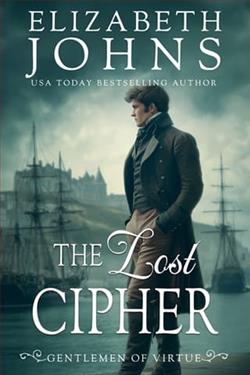
Elizabeth Johns' The Lost Cipher is a compelling historical romance that deftly intertwines themes of trust, loyalty, and redemption against the backdrop of post-war intrigue. The novel is set in a period where the echoes of war still reverberate through the lives of its characters, and Johns skillfully uses this setting to explore the complexities of human relationships and the burdens of past actions.
At the heart of the story is Captain Edmund Cholmely, a man haunted by the shadow of his brother's betrayal and subsequent death. Edmund's character is meticulously crafted, embodying the struggle between duty and personal redemption. His journey from a state of melancholy to one of renewed purpose is both engaging and relatable. Johns paints Edmund as a man of principle, yet one who is deeply flawed, making his internal conflict all the more poignant. The task of unraveling the mystery of the stolen coded ledger becomes a metaphor for Edmund's own need to untangle his emotions and find peace with his past.
Elise Larkin, the reserved widow who runs a boarding school, is a character of depth and resilience. Her life, marked by the loss of her husband, Captain Charles Larkin, is one of quiet strength and determination. Elise's character is a testament to the fortitude of women who, during times of war, had to navigate the challenges of survival and independence. Her initial suspicion of Edmund is understandable, given her protective instincts over the cipher and the potential danger it represents. However, as the narrative progresses, Elise's guarded nature begins to thaw, revealing a woman capable of great love and trust.
The chemistry between Edmund and Elise is palpable, and Johns expertly builds their relationship on a foundation of mutual respect and shared purpose. The tension between their suspicions and growing attraction adds a layer of complexity to their interactions, making their eventual romance both satisfying and believable. The author’s ability to weave romance into a narrative filled with suspense and intrigue is commendable, and it is this balance that keeps the reader engaged throughout.
One of the novel's significant themes is the idea of trust and how it is earned and tested. Both Edmund and Elise must navigate their pasts and the secrets they hold, learning to trust each other despite the risks involved. This theme is mirrored in the broader context of the story, where the stolen cipher represents the potential for betrayal and the need for discretion and loyalty. Johns uses the cipher as a symbol of the hidden truths and the power they hold, both in personal relationships and in the broader scope of war and espionage.
Johns' writing is both elegant and evocative, capturing the essence of the era with vivid descriptions and a keen attention to detail. The seaside town setting provides a picturesque backdrop that contrasts with the underlying tension of the plot. The author’s ability to create a sense of place enhances the story, immersing the reader in the world she has crafted.
In comparison to other historical romances, such as those by Julia Quinn or Mary Balogh, The Lost Cipher stands out for its intricate plot and the depth of its characters. While Quinn often focuses on the lighter, more humorous aspects of romance, and Balogh delves into the emotional and psychological complexities of her characters, Johns strikes a balance between suspense and romance, offering a narrative that is both thrilling and emotionally resonant.
Overall, The Lost Cipher is a captivating read that will appeal to fans of historical romance and mystery alike. Elizabeth Johns has crafted a story that is rich in emotion and intrigue, with characters that linger in the mind long after the final page is turned. The novel's exploration of trust, loyalty, and the quest for redemption is both timeless and timely, making it a worthy addition to the genre.
For readers seeking a story that combines the allure of romance with the excitement of a mystery, The Lost Cipher is an excellent choice. Elizabeth Johns has proven once again that she is a master storyteller, capable of weaving a narrative that is as intricate as the cipher at the heart of her tale.



