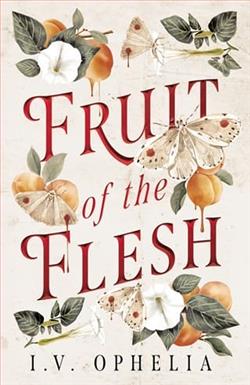
I.V. Ophelia's Fruit of the Flesh is a masterful exploration of the human psyche set against the opulent yet shadowy backdrop of Gilded Age New York. This novel is a darkly seductive gothic romance that delves into the complexities of a marriage of convenience, which is anything but simple. Through the lives of Petronille De Villier and Arkady Kamenev, Ophelia crafts a narrative that is as much about the allure of revenge as it is about the intoxicating dance between predator and prey.
The novel opens with Petronille, a former ballerina, making the unconventional decision to marry Arkady, a struggling sculptor. This union is initially portrayed as a pragmatic arrangement: Petronille seeks to escape her family's unsavory legacy, while Arkady hopes to benefit from the De Villier name to gain the patronage his art desperately needs. However, as the story unfolds, it becomes clear that their relationship is far more complex and layered than a mere transaction.
One of the most compelling aspects of Fruit of the Flesh is its exploration of shared obsessions and dangerous appetites. Both Petronille and Arkady are driven by a desire for revenge, and it is this shared hunger that binds them together in a way that is both thrilling and unsettling. Ophelia skillfully weaves a narrative that blurs the lines between love and obsession, creating a tension that is palpable throughout the novel.
The character development in this novel is exceptional. Petronille is a fascinating protagonist, a woman who defies the conventions of her time by taking control of her own destiny. Her transformation from a ballerina seeking escape to a woman embracing her darker nature is both believable and compelling. Similarly, Arkady is a complex character whose artistic ambitions are intertwined with his own moral ambiguities. Together, they form a partnership that is as much about survival as it is about love.
Ophelia's writing is richly atmospheric, capturing the essence of early 1900s New York with vivid detail. The setting serves as more than just a backdrop; it is an integral part of the story, reflecting the opulence and decay that mirror the characters' inner turmoil. The author’s ability to create a sense of place is reminiscent of the works of Edith Wharton, yet with a darker, more gothic twist.
The themes of Fruit of the Flesh are both timeless and timely. The novel explores the idea of identity and the masks we wear to navigate society. Petronille and Arkady's marriage is a facade, but it is through this facade that they discover their true selves. The novel also delves into the nature of love and whether it can exist alongside darkness and deceit. Ophelia challenges the reader to consider whether true love requires a taste for the macabre, a question that lingers long after the final page is turned.
In terms of its overall impact, Fruit of the Flesh is a novel that stays with you. It is a story that invites readers to explore the darker corners of the human heart, to question the nature of love and revenge, and to consider the ways in which we are all both predator and prey. The novel's conclusion is both satisfying and thought-provoking, leaving readers to ponder the complexities of the characters' relationship and the choices they have made.
Comparatively, Ophelia's work can be likened to the gothic romances of Daphne du Maurier, particularly in its exploration of psychological depth and moral ambiguity. However, Ophelia brings a unique voice to the genre, infusing it with a modern sensibility that makes it accessible to contemporary readers. The novel's blend of romance, mystery, and psychological intrigue sets it apart from more traditional gothic tales, offering a fresh take on familiar themes.
In conclusion, Fruit of the Flesh is a beautifully crafted novel that will appeal to fans of gothic romance and psychological thrillers alike. I.V. Ophelia has created a world that is both enchanting and unsettling, populated by characters who are as flawed as they are fascinating. This is a novel that demands to be savored, a story that invites readers to lose themselves in its dark and seductive embrace.



