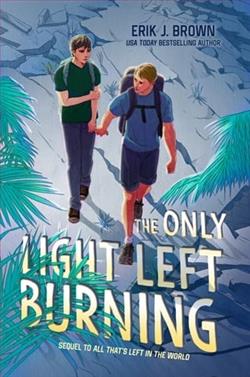
Erik J. Brown’s The Only Light Left Burning is a poignant continuation of the post-apocalyptic journey that began with All That’s Left in the World. This sequel deftly combines elements of adventure, romance, and survival, all while exploring the complexities of human relationships in a world that has been irrevocably changed. Fans of the first book will find themselves once again immersed in the lives of Andrew and Jamie, two young men whose bond is tested by both external threats and internal conflicts.
Set against the backdrop of a world ravaged by a deadly virus, the novel picks up with Andrew and Jamie having reached the relative safety of the Florida Keys. However, as the blurb suggests, safety does not equate to a fairy-tale ending. Brown skillfully portrays the tension between the desire for security and the need for personal fulfillment. This theme is central to the narrative, as Andrew and Jamie grapple with their differing visions of what "home" truly means.
Andrew, ever the optimist, sees the Islamorada colony as a place where they can finally settle down and build a life. His longing for stability and community is palpable, and Brown captures this with a sensitivity that makes Andrew’s perspective both relatable and heart-wrenching. On the other hand, Jamie’s restlessness and anxiety are portrayed with equal depth. His commitment to the promise made to their friend Henri adds layers to his character, revealing a sense of duty and loyalty that is both admirable and burdensome.
The character development in The Only Light Left Burning is one of its strongest aspects. Brown does not shy away from depicting the flaws and vulnerabilities of his protagonists. Instead, he embraces them, allowing Andrew and Jamie to grow organically as they face new challenges. The tension between them is not just a plot device but a realistic portrayal of how relationships can be strained by differing priorities and external pressures. This nuanced approach makes their journey all the more compelling.
In terms of themes, the novel delves into the idea of what it means to find a home in a world that has been stripped of its familiar comforts. The juxtaposition of the idyllic setting of the Florida Keys with the underlying threat of danger serves as a metaphor for the precarious nature of their existence. Brown’s exploration of this theme is reminiscent of Adam Silvera’s They Both Die at the End, where the inevitability of loss is juxtaposed with the beauty of human connection.
Moreover, the novel’s exploration of betrayal and trust adds another layer of complexity to the narrative. The hurricane and subsequent betrayal that force Andrew and Jamie to leave the colony serve as catalysts for their personal growth. These events challenge their perceptions of safety and loyalty, pushing them to confront their fears and insecurities. Brown’s ability to weave these themes into the fabric of the story is a testament to his skill as a storyteller.
Comparatively, The Only Light Left Burning shares thematic similarities with Becky Albertalli and Adam Silvera’s What If It’s Us, particularly in its portrayal of young love amidst uncertainty. Both stories highlight the resilience of the human spirit and the power of love to transcend even the most dire circumstances. However, Brown’s novel stands out for its post-apocalyptic setting, which adds a unique dimension to the exploration of these themes.
The pacing of the novel is well-balanced, with moments of tension and introspection interspersed with action-packed sequences. Brown’s descriptive prose brings the setting to life, immersing readers in the lush yet dangerous landscape of the Florida Keys. The hurricane scene, in particular, is a standout moment, capturing the raw power of nature and its impact on the characters’ lives.
Overall, The Only Light Left Burning is a worthy sequel that builds upon the foundation laid by its predecessor. Erik J. Brown has crafted a story that is both heartwarming and heartbreaking, exploring the complexities of love, loyalty, and survival in a world that offers no guarantees. The novel’s emotional depth and richly developed characters make it a must-read for fans of post-apocalyptic fiction and queer romance alike.
In conclusion, Brown’s latest work is a testament to the enduring power of hope and the human capacity for resilience. It challenges readers to consider what truly matters in the face of adversity and leaves a lasting impact that resonates long after the final page is turned. For those seeking a story that is both thought-provoking and emotionally engaging, The Only Light Left Burning is a light worth following.



