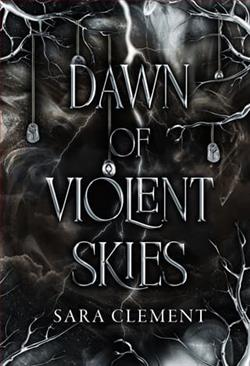
Sara Clement's Dawn of Violent Skies is a captivating exploration of a world teetering on the brink of chaos, where the absence of divine intervention has left its inhabitants grappling with the shadows of their own making. The novel is a rich tapestry of mythological intrigue, character-driven narratives, and a profound exploration of themes such as duty, love, and the quest for redemption.
At the heart of the story is Solveig, Asgard’s illustrious general, whose journey is both a personal and epic quest. Tasked with the monumental responsibility of restoring magic to the realms, Solveig embodies the archetype of the hero burdened by duty. Her character is meticulously crafted, showcasing a blend of strength, vulnerability, and an unwavering sense of purpose. Clement skillfully delves into Solveig’s internal conflicts, particularly when she is faced with the harrowing choice between fulfilling her duty and saving someone she loves. This dilemma is a poignant reflection of the broader theme of sacrifice that permeates the narrative.
Parallel to Solveig’s journey is the story of Westley, the prince of the Forest Fae. His character adds a layer of complexity to the narrative, as he grapples with the impending extinction of his people. Westley’s determination to unearth centuries-old betrayals and seek justice for his people is a compelling subplot that intertwines seamlessly with the main storyline. His alliance with Solveig, though fraught with tension and mistrust, evolves into a partnership that is both strategic and deeply human. Clement’s portrayal of their dynamic is nuanced, capturing the delicate balance between cooperation and conflict.
The world-building in Dawn of Violent Skies is nothing short of extraordinary. Clement draws inspiration from Norse mythology, weaving a rich tapestry of gods, magic, and mythical creatures. The realms are vividly depicted, each with its own distinct culture and history. The author’s attention to detail is evident in the intricate descriptions of the landscapes, from the ethereal beauty of the Forest Fae’s domain to the stark, imposing presence of Asgard. This immersive setting serves as a backdrop for the unfolding drama, enhancing the reader’s engagement with the story.
One of the novel’s standout features is its exploration of the theme of darkness, both literal and metaphorical. The unknown shadow that spreads throughout the world, darkening hearts and tearing allies apart, serves as a powerful metaphor for the internal and external struggles faced by the characters. Clement masterfully uses this motif to delve into the complexities of human nature, exploring how fear, betrayal, and ambition can lead to the unraveling of alliances and the erosion of trust. This thematic depth adds a layer of sophistication to the narrative, elevating it beyond a mere fantasy adventure.
In terms of character development, Clement excels in creating multi-dimensional characters who evolve over the course of the story. Solveig’s journey is one of self-discovery, as she confronts her fears and grapples with the consequences of her choices. Her growth is mirrored by Westley, whose quest for justice forces him to confront his own prejudices and assumptions. The supporting cast is equally well-developed, with each character contributing to the richness of the narrative. The interplay between the characters is dynamic, with alliances shifting and evolving as the story progresses.
Comparatively, Dawn of Violent Skies shares thematic similarities with other works in the fantasy genre, such as Brandon Sanderson’s Mistborn series and Patrick Rothfuss’s The Kingkiller Chronicle. Like Sanderson, Clement crafts a world where magic is both a source of power and a catalyst for conflict. The intricate magic system and the exploration of its impact on society are reminiscent of Sanderson’s meticulous world-building. Similarly, Clement’s focus on character-driven narratives and the exploration of personal and moral dilemmas echoes Rothfuss’s approach to storytelling.
Overall, Dawn of Violent Skies is a compelling addition to the fantasy genre, offering a fresh take on familiar themes while delivering a narrative that is both engaging and thought-provoking. Sara Clement’s ability to weave together complex characters, a richly detailed world, and profound thematic exploration makes this novel a must-read for fans of epic fantasy. The book’s exploration of duty, love, and redemption resonates on a universal level, inviting readers to reflect on their own values and choices.
In conclusion, Dawn of Violent Skies is a testament to Sara Clement’s skill as a storyteller. Her ability to craft a narrative that is both epic in scope and deeply personal in its exploration of character and theme is a testament to her talent. This novel is sure to captivate readers, leaving them eagerly anticipating the next installment in this enthralling saga. Whether you are a seasoned fan of fantasy or new to the genre, Dawn of Violent Skies promises an unforgettable journey through a world where magic, myth, and humanity collide.



