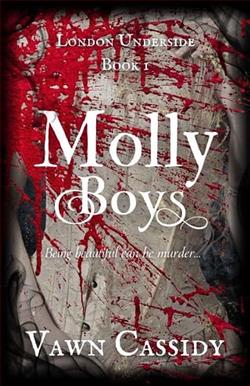
Vawn Cassidy's Molly Boys is a captivating historical fiction novel that delves into the shadowy underbelly of Victorian London, weaving a tale of mystery, forbidden love, and societal constraints. Set against the backdrop of 1885 London, the novel explores the clandestine world of molly houses—secretive havens for homosexual men during a time when their very existence was criminalized. Cassidy's narrative is a compelling blend of romance and suspense, with a rich tapestry of historical detail that immerses the reader in the era's complexities.
At the heart of the story is Lord Everett Stanley, a character whose internal conflict is both poignant and relatable. As the second son of a noble family, Everett is expected to embrace a life of religious ordination, yet he harbors a secret that could lead to his ruin. The tension between his societal obligations and his true self is a central theme that Cassidy explores with sensitivity and depth. Everett's character is a study in contrasts—noble yet vulnerable, constrained yet yearning for freedom. His journey is one of self-discovery, as he navigates the perilous waters of Victorian society's rigid norms.
Inspector Archibald Franklin, the novel's other protagonist, is a man of principle and ambition. Having risen from humble beginnings to become a respected inspector in Whitechapel's H Division, Archie embodies the era's class struggles. His investigation into the murders of young men in the East End brings him into contact with Everett, and their ensuing relationship is a masterclass in slow-burn romance. Cassidy skillfully portrays Archie's internal struggle as he grapples with his growing feelings for Everett, which challenge the very laws he has sworn to uphold. This conflict adds a layer of complexity to Archie's character, making him a compelling figure whose personal and professional lives are inextricably linked.
The novel's exploration of themes such as identity, love, and societal oppression is both timely and timeless. Cassidy does not shy away from depicting the harsh realities faced by homosexual men in the 19th century, yet she does so with a nuanced understanding of the human condition. The molly houses, while offering a semblance of refuge, are also fraught with danger, reflecting the precarious existence of those who frequented them. Through Everett and Archie's experiences, Cassidy highlights the courage required to live authentically in a world that demands conformity.
One of the novel's strengths is its atmospheric setting. Cassidy's vivid descriptions of Victorian London bring the city to life, from the opulence of the upper classes to the gritty streets of the East End. The historical context is meticulously researched, providing a rich backdrop for the unfolding drama. The sense of place is palpable, enhancing the reader's immersion in the story and heightening the tension as the mystery of the murders unfolds.
In terms of character development, Cassidy excels in creating multi-dimensional figures who evolve over the course of the narrative. Everett's transformation from a man burdened by societal expectations to one who embraces his true self is particularly well-rendered. Similarly, Archie's journey from a law-abiding inspector to a man willing to risk everything for love is both believable and moving. The chemistry between the two protagonists is electric, their interactions charged with a mix of tension and tenderness that keeps the reader engaged.
Comparatively, Molly Boys shares thematic similarities with Sarah Waters' Tipping the Velvet and Emma Donoghue's Slammerkin, both of which explore the lives of marginalized individuals in historical settings. Like Waters and Donoghue, Cassidy has a keen eye for historical detail and a talent for creating compelling narratives that resonate with contemporary readers. However, Molly Boys distinguishes itself with its focus on the intersection of love and law, and the moral dilemmas faced by those who straddle these worlds.
The novel's pacing is well-balanced, with the suspense of the murder investigation complementing the development of Everett and Archie's relationship. Cassidy deftly weaves these elements together, ensuring that neither aspect overshadows the other. The result is a narrative that is both thrilling and emotionally resonant, keeping the reader invested in the outcome of both the mystery and the romance.
Overall, Molly Boys is a beautifully crafted novel that offers a poignant exploration of love and identity in a time of repression. Vawn Cassidy's ability to blend historical accuracy with compelling storytelling makes this a standout work in the genre of historical fiction. The novel's themes of courage, authenticity, and the transformative power of love are universal, ensuring that it will resonate with readers long after the final page is turned. For those seeking a story that is both thought-provoking and emotionally satisfying, Molly Boys is a must-read.



