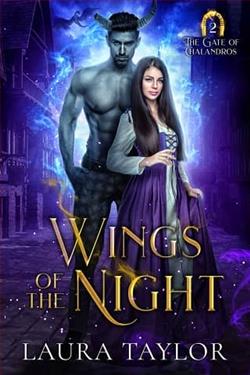
Laura Taylor's Wings of the Night is a captivating exploration of the boundaries between worlds, cultures, and the very nature of good and evil. At its core, the novel is a tale of unexpected alliances and the transformative power of understanding, set against the backdrop of a richly imagined fantasy world.
The premise of the book is immediately intriguing: the Gate of Chalandros, a mystical portal that connects the human world to that of the demons. This gateway serves as both a literal and metaphorical bridge, challenging the characters and readers alike to reconsider preconceived notions about the 'other.' Taylor's world-building is commendable, as she crafts a universe where the fantastical elements feel grounded and believable. The salases, a black-skinned, horned species of warriors, are not merely caricatures of demons but are given depth and complexity, particularly through the character of Koradan.
Koradan, the proud soldier of the salases, is a standout character. His dedication to his people and his king is palpable, yet it is his willingness to adapt and seek peace that truly defines him. Taylor skillfully portrays his internal struggle as he navigates the human world, torn between his duty and the burgeoning realization that peace might be possible. Koradan's character development is a testament to Taylor's ability to craft multidimensional characters who defy simple categorization.
On the other side of the portal is Lynette, a widow who has sought solace in the quiet village of Varismont. Her life is upended by the arrival of Koradan and his men, forcing her to confront her fears and prejudices. Lynette's journey from fear to understanding is both compelling and relatable. As the village's only nurse, her interactions with Koradan provide a lens through which the reader can explore the broader themes of the novel. Her initial skepticism and eventual openness to the idea of peace highlight the transformative power of empathy and communication.
The relationship between Lynette and Koradan is central to the narrative, serving as a microcosm of the larger conflict between humans and demons. Their interactions are charged with tension and curiosity, as both characters are forced to confront their biases and assumptions. Taylor deftly navigates their evolving dynamic, avoiding clichéd romantic tropes in favor of a more nuanced exploration of trust and mutual respect. This relationship is a testament to the novel's overarching theme: the possibility of reconciliation and understanding between seemingly irreconcilable worlds.
One of the most striking aspects of Wings of the Night is its thematic depth. The novel challenges the simplistic dichotomy of good versus evil, urging readers to consider the complexities of cultural conflict and the potential for peace. Taylor's narrative is a timely reminder of the importance of empathy and dialogue in bridging divides, a message that resonates powerfully in today's world.
In terms of pacing, the novel strikes a fine balance between action and introspection. The initial tension of the demons' arrival in Varismont is palpable, setting the stage for the unfolding drama. As the story progresses, Taylor expertly weaves moments of quiet reflection with bursts of action, maintaining a steady momentum that keeps the reader engaged. The climactic moments are well-executed, providing a satisfying resolution that feels earned rather than contrived.
Comparatively, Wings of the Night shares thematic similarities with works like N.K. Jemisin's The Broken Earth trilogy and Naomi Novik's Uprooted. Like Jemisin, Taylor explores themes of cultural conflict and the potential for reconciliation, while Novik's influence can be seen in the novel's rich world-building and the complex interplay between human and non-human characters. However, Taylor's work stands out for its focus on the personal, intimate nature of these conflicts, grounding the fantastical elements in relatable human experiences.
Overall, Wings of the Night is a thought-provoking and emotionally resonant novel that challenges readers to reconsider their assumptions about the nature of conflict and the potential for peace. Laura Taylor has crafted a compelling narrative that is both entertaining and enlightening, offering a fresh perspective on the fantasy genre. For readers seeking a story that combines rich world-building with deep thematic exploration, Wings of the Night is a must-read.



