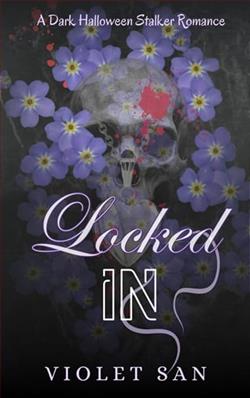
Violet San's Locked In is a gripping psychological thriller that delves into the depths of obsession, revenge, and the intricate dance between predator and prey. The novel's blurb sets the stage for a tale that promises tension and intrigue, and San delivers on this promise with a narrative that is as compelling as it is unsettling.
The story revolves around Ainsley Hades, a character whose life has been a series of unfortunate events, seemingly dictated by fate. Her return to South Highland, after a failed attempt at starting anew in Melbourne, is marked by a sense of defeat and desperation. Ainsley's character is crafted with a depth that makes her struggles palpable. She is not just a victim of circumstance but a resilient individual trying to navigate the chaos that her life has become. Her journey is one of survival, and San portrays her with a raw authenticity that makes her both relatable and sympathetic.
On the other side of this narrative is Theon Ryder, a character whose obsession with Ainsley is both terrifying and fascinating. San skillfully constructs Theon's character as a complex antagonist whose motivations are rooted in a past misunderstanding. His fixation on Ainsley is not just a plot device but a window into the darker aspects of human nature. Theon's character is a study in contrasts—his calculated revenge juxtaposed with the chaotic resurgence of his obsession when faced with Ainsley once more. This duality makes him a compelling figure, one whose actions are unpredictable yet meticulously planned.
The themes of Locked In are woven intricately into the narrative, exploring the destructive power of obsession and the thin line between love and hate. San examines how past traumas and misunderstandings can fester into something dangerous, affecting not just the individuals involved but everyone around them. The novel also touches on the idea of control—how Theon’s need to manipulate Ainsley’s life is a manifestation of his own insecurities and unresolved emotions.
San's writing style is both evocative and immersive, drawing readers into a world where every action has a consequence, and every character is a piece of a larger puzzle. The pacing is deliberate, allowing for a slow build-up of tension that keeps readers on edge. The narrative is interspersed with moments of introspection, providing insight into the characters' minds and adding layers to the story.
One of the novel's strengths is its ability to maintain suspense throughout. San masterfully crafts a plot that is unpredictable, with twists and turns that keep readers guessing. The introduction of a darker force, another entity with its own claim on Ainsley, adds an additional layer of complexity to the story. This element of the unknown heightens the stakes and reinforces the theme of Ainsley being caught in a web of forces beyond her control.
In comparison to other works in the genre, Locked In stands out for its character-driven narrative and psychological depth. It shares thematic similarities with novels like Gillian Flynn's Gone Girl and Paula Hawkins' The Girl on the Train, where the focus is on the intricacies of human relationships and the dark undercurrents that lie beneath the surface. However, San's novel distinguishes itself with its exploration of obsession from the perspective of both the obsessed and the object of obsession, providing a more rounded view of the psychological dynamics at play.
Overall, Locked In is a compelling read that offers more than just a tale of revenge. It is a psychological exploration of the human psyche, a narrative that challenges readers to question the nature of obsession and the lengths to which it can drive a person. Violet San has crafted a story that is both haunting and thought-provoking, leaving a lasting impact on its readers.
For those who enjoy thrillers that delve into the complexities of human emotions and motivations, Locked In is a must-read. It is a novel that not only entertains but also invites reflection on the darker aspects of love and the consequences of unresolved pasts.



