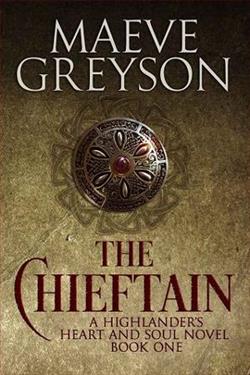
Maeve Greyson’s The Chieftain is a compelling historical romance that deftly intertwines themes of duty, sacrifice, and love against the backdrop of medieval Scotland. The novel is a testament to Greyson’s ability to craft a narrative that is as emotionally resonant as it is richly detailed, drawing readers into a world where personal desires are often at odds with familial and societal obligations.
At the heart of the story is Alexander MacCoinnich, a mercenary whose life is defined by the battles he chooses and the causes he champions. Alexander is a character who embodies the classic archetype of the noble warrior, yet Greyson adds layers to his persona by imbuing him with a conscience that guides his actions. His internal struggle between continuing his life as a soldier for hire and retiring to save the woman he loves adds depth to his character, making him more than just a sword-wielding hero. Alexander’s journey is one of self-discovery, as he grapples with the realization that true strength may lie not in his martial prowess but in his capacity for love and sacrifice.
Opposite Alexander is Catriona Neal, a woman bound by a promise made to her dying mother. Catriona’s character is a study in resilience and determination. Her role as the de facto leader of Clan Neal, despite the oppressive presence of her father and the looming threat of her brother, showcases her strategic acumen and unwavering commitment to her people. Greyson paints Catriona as a heroine who is both vulnerable and formidable, a woman who has sacrificed her personal happiness for the greater good. Her internal conflict—whether to follow her heart or remain shackled by duty—forms the emotional core of the novel.
The relationship between Alexander and Catriona is beautifully developed, with Greyson taking care to build their connection on mutual respect and understanding. Their romance is not merely a subplot but a driving force of the narrative, highlighting the transformative power of love. The chemistry between them is palpable, and their interactions are charged with a tension that is both romantic and fraught with the potential for heartbreak. Greyson skillfully navigates their evolving relationship, allowing it to unfold naturally amidst the external pressures they face.
The Chieftain is also notable for its exploration of themes such as loyalty, power, and the cost of leadership. Through Catriona’s struggles, Greyson examines the burdens of leadership and the sacrifices it demands. The novel raises poignant questions about the nature of power and the moral complexities that accompany it. Catriona’s predicament—being unable to marry due to her self-imposed duty—serves as a metaphor for the constraints placed on women in patriarchal societies, making her story resonate with contemporary readers who may face similar dilemmas in different forms.
Greyson’s prose is both evocative and immersive, painting a vivid picture of the Scottish Highlands and the turbulent era in which the story is set. Her attention to historical detail enriches the narrative, providing a backdrop that is as compelling as the characters themselves. The author’s ability to weave historical authenticity with fictional storytelling is reminiscent of the works of Diana Gabaldon and her Outlander series, where the setting becomes an integral part of the story.
In comparison to other historical romances, The Chieftain stands out for its strong character development and the emotional depth of its narrative. While authors like Julie Garwood and Johanna Lindsey have also explored similar themes in their works, Greyson’s novel is distinguished by its focus on the internal conflicts of its protagonists and the moral dilemmas they face. The novel’s pacing is well-balanced, with moments of introspection seamlessly interwoven with action and intrigue, keeping readers engaged from start to finish.
Overall, The Chieftain is a captivating tale that will appeal to fans of historical romance and those who appreciate stories of love and sacrifice. Maeve Greyson has crafted a narrative that is both timeless and timely, offering readers a story that is as much about the past as it is about the enduring nature of the human spirit. The novel’s exploration of love, duty, and the choices that define us makes it a poignant and memorable read, one that lingers long after the final page is turned.
In conclusion, The Chieftain is a masterful blend of romance and historical fiction, with characters that are as complex as they are relatable. Greyson’s ability to weave a tale that is both entertaining and thought-provoking is a testament to her skill as a storyteller. For those seeking a novel that offers both heart and substance, The Chieftain is a worthy addition to any reading list.



