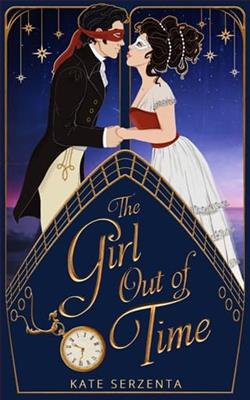
Kate Serzenta's The Girl Out of Time is a captivating blend of historical fiction, romance, and science fiction, weaving together the opulence of the Titanic era with the elegance of Regency England. This third installment in Serzenta's time-travel series offers readers a thrilling journey through time, exploring themes of identity, freedom, and the complexities of love.
At the heart of the story is Emmeline Marshall, a young woman on the cusp of adulthood, grappling with the constraints imposed by her family and society. Set in 1912, Emmeline's initial predicament is one that many readers will find relatable: the struggle for autonomy in a world that seeks to define her. Her impending enrollment in a finishing school symbolizes the societal expectations of women during this era, and her desire for freedom is palpable. Serzenta skillfully captures Emmeline's internal conflict, making her a compelling protagonist whose journey is both personal and universal.
The novel's inciting incident—a voyage on the Titanic—serves as a metaphor for Emmeline's transition from girlhood to womanhood. The introduction of Leon, a mysterious and alluring figure, adds a layer of romantic intrigue that is both engaging and thought-provoking. Their relationship is a catalyst for Emmeline's transformation, challenging her to question her desires and the life she envisions for herself. The tension between Emmeline and her father, exacerbated by her interactions with Leon, underscores the generational and cultural divides that define her world.
Serzenta's decision to transport Emmeline to 1815 is a masterstroke, allowing the narrative to explore the concept of time travel in a fresh and imaginative way. The transition is seamless, and the juxtaposition of the two time periods enriches the story's thematic depth. In Regency England, Emmeline finds herself living a life that seems to fulfill her fantasies: she is a wealthy heiress, engaged to a duke's son, and surrounded by the trappings of high society. Yet, as the narrative unfolds, it becomes clear that this seemingly perfect existence is fraught with its own challenges and dangers.
The introduction of Theo, a reincarnation of Leon, adds complexity to the narrative, as Emmeline grapples with the enigma of his presence and the mystery of their shared history. Serzenta deftly explores the idea of destiny and the interconnectedness of lives across time, inviting readers to ponder the nature of love and identity. The treasure hunt subplot, inspired by a gothic romance, serves as a clever narrative device that propels the story forward while deepening the mystery surrounding Emmeline's powers and her family's involvement in time travel.
One of the novel's strengths is its rich historical detail, which brings both the Titanic era and Regency London to life. Serzenta's meticulous research is evident in her vivid descriptions of the settings, from the grandeur of the Titanic to the opulence of Regency ballrooms. This attention to detail enhances the immersive quality of the narrative, allowing readers to lose themselves in the world Serzenta has created.
Character development is another highlight of the novel. Emmeline's evolution from a sheltered young woman to a self-assured individual is portrayed with nuance and sensitivity. Her journey is one of self-discovery, as she learns to navigate the complexities of love, loyalty, and personal agency. The supporting characters, including Theo and Emmeline's friends in Regency London, are well-drawn and contribute to the richness of the story. Each character serves a purpose, whether as a foil to Emmeline or as a catalyst for her growth.
In terms of thematic exploration, The Girl Out of Time delves into the tension between fate and free will, the search for identity, and the power of love to transcend time. These themes are woven intricately into the narrative, offering readers a thought-provoking and emotionally resonant experience. The novel's exploration of time travel is particularly noteworthy, as it raises questions about the nature of reality and the possibility of alternate lives.
Comparatively, Serzenta's work can be likened to other time-travel romances such as Diana Gabaldon's Outlander series, which also blends historical fiction with elements of fantasy and romance. However, Serzenta's focus on the Titanic and Regency England sets her work apart, offering a unique perspective on these iconic periods. Her ability to balance historical accuracy with imaginative storytelling is commendable, making The Girl Out of Time a standout in the genre.
Overall, The Girl Out of Time is a beautifully crafted novel that will appeal to fans of historical fiction, romance, and time travel. Serzenta's skillful storytelling, combined with her rich character development and thematic depth, makes this a compelling read that lingers long after the final page. Whether you're drawn to the allure of the Titanic, the elegance of Regency London, or the timeless nature of love, this novel offers something for everyone. It's a testament to Serzenta's talent as a writer and her ability to transport readers to worlds both familiar and fantastical.



