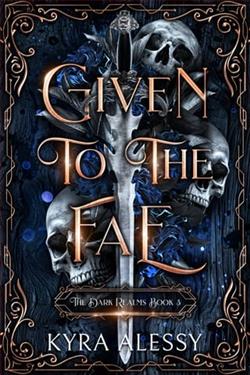
Kyra Alessy's Given to the Fae is a captivating foray into a world where the boundaries between human and fae are blurred, and the stakes are as high as they are personal. This novel, with its intriguing premise and richly woven narrative, offers a fresh take on the fantasy genre, blending elements of romance, adventure, and existential exploration.
At the heart of the story is Kismet, a Fate-Touched slave whose very existence is a paradox. Her unique ability to invoke fate's wrath upon those who harm her sets the stage for a narrative that is as much about survival as it is about self-discovery. Kismet's journey is one of empowerment, as she navigates a world that seeks to define her by her chains, yet she yearns for freedom and identity beyond them. Alessy crafts Kismet with a depth that resonates; she is both vulnerable and formidable, a character whose evolution is central to the novel's impact.
The introduction of the three fae spies—Locke, Morgan, and Jak—adds layers of complexity to the narrative. Each character is meticulously developed, offering distinct perspectives and emotional depth. Locke, the cold mage, embodies a dichotomy of disdain and desire, his interactions with Kismet charged with tension and unspoken longing. Morgan, the half-orc, is a study in contrasts; his gentle demeanor masks a turbulent past, making his connection with Kismet both tender and poignant. Jak, the healer, provides a sense of hope and healing, not just physically but emotionally, as he helps Kismet envision a life beyond servitude.
The dynamic between Kismet and the fae trio is central to the novel's thematic exploration of trust, power, and freedom. Alessy deftly navigates the intricacies of these relationships, using them as a lens through which to examine larger societal constructs. The fae, immune to fate's retribution, represent both a threat and a promise to Kismet. Their world, where humans are free, stands in stark contrast to the oppressive environment Kismet has known, challenging her perceptions and igniting a desire for liberation.
Alessy's world-building is both imaginative and immersive. The setting—a slave outpost on a dying rock—serves as a grim backdrop that underscores the novel's themes of captivity and resilience. The transition to the Dark Realms, with its promise of freedom and danger, is executed with a keen eye for detail, creating a vivid tapestry that draws readers into its depths. The juxtaposition of these worlds highlights the novel's exploration of choice and destiny, inviting readers to ponder the nature of freedom and the cost of survival.
One of the novel's strengths lies in its ability to balance action with introspection. The narrative is punctuated by moments of intense conflict and quiet reflection, allowing for a pacing that is both engaging and thought-provoking. Alessy's prose is lyrical yet precise, capturing the emotional nuances of her characters while driving the plot forward with momentum.
In comparison to other works within the fantasy genre, Given to the Fae stands out for its nuanced character development and thematic depth. Fans of Sarah J. Maas's A Court of Thorns and Roses series will find familiar elements in Alessy's exploration of fae politics and human-fae dynamics, yet Alessy carves her own niche with a narrative that is distinctly her own. The novel's focus on fate and autonomy echoes themes found in Leigh Bardugo's Grishaverse, yet Alessy's approach is uniquely intimate, centering on personal transformation and the power of choice.
Overall, Given to the Fae is a compelling addition to the fantasy genre, offering a story that is as emotionally resonant as it is thrilling. Kyra Alessy has crafted a narrative that challenges conventions and invites readers to question the nature of power, identity, and freedom. For those seeking a tale that is both enchanting and thought-provoking, this novel is a journey worth undertaking.



