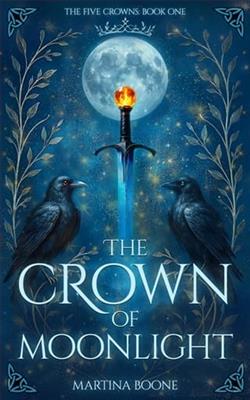
Martina Boone's The Crown of Moonlight is a captivating blend of romantic fantasy and historical intrigue, weaving together elements reminiscent of A Court of Thorns and Roses and Outlander. This novel offers a rich tapestry of high fae courts, Highland clans, and a compelling narrative that keeps readers enthralled from start to finish.
At the heart of the story is Flora Domhnall, a young Highland woman whose fierce determination to protect her clan sets the stage for a tale of loyalty, love, and sacrifice. Flora is a character who embodies strength and resilience, qualities that are tested as she navigates the dangerous political landscape between warring immortal factions. Her character development is one of the novel's standout features, as Boone skillfully portrays her evolution from a clan protector to a key player in a larger conflict.
Flora's journey begins when she discovers Chyr, a dying warrior from the rebel king’s Riders, in her woods. This encounter is the catalyst for a series of events that thrusts Flora into a world of magic and danger. Chyr, an immortal protector, is a complex character whose mysterious wound and impending mortality add layers of intrigue to the narrative. His relationship with Flora is central to the story, and Boone deftly explores the dynamics of their reluctant partnership. The chemistry between Flora and Chyr is palpable, and their interactions are filled with tension, humor, and an underlying sense of destiny.
The novel's setting is another of its strengths. Boone's depiction of the Highlands is both vivid and atmospheric, capturing the rugged beauty and mystical aura of the landscape. The moors and mountains serve as a backdrop for the unfolding drama, and Boone's descriptive prose brings the setting to life in a way that is both immersive and enchanting. The sense of place is further enhanced by the inclusion of Scottish folklore and fae mythology, which add depth and authenticity to the story.
One of the central themes of The Crown of Moonlight is the conflict between duty and desire. Flora and Chyr are both bound by their responsibilities—to their people, their worlds, and their own personal codes of honor. Yet, as the story progresses, they are forced to confront the limitations of these obligations and the sacrifices they must make for the greater good. This theme is explored with nuance and sensitivity, and Boone does an excellent job of illustrating the internal struggles faced by her characters.
The novel also delves into the idea of power and its consequences. Flora's burgeoning magical abilities are a source of both wonder and danger, and Boone examines the ethical dilemmas that arise from wielding such power. Chyr's own struggles with his immortality and the responsibilities it entails further underscore the complexities of power and its impact on personal identity and relationships.
In terms of pacing, The Crown of Moonlight strikes a balance between action and introspection. The plot is well-structured, with a series of escalating conflicts that keep the tension high and the stakes ever-increasing. Boone's writing is both lyrical and precise, capturing the emotional intensity of the characters' experiences while maintaining a sense of momentum that propels the story forward.
Comparatively, fans of Sarah J. Maas's A Court of Thorns and Roses will find much to enjoy in Boone's novel. Both stories feature strong female protagonists, intricate world-building, and a blend of romance and fantasy that is both engaging and satisfying. Similarly, readers who appreciate the historical elements and time-travel aspects of Diana Gabaldon's Outlander series will be drawn to the historical setting and the interplay between different worlds in The Crown of Moonlight.
Overall, The Crown of Moonlight is a beautifully crafted novel that offers a fresh take on the romantic fantasy genre. Martina Boone has created a world that is both familiar and new, populated by characters who are as compelling as they are complex. The novel's exploration of themes such as duty, power, and love is both thought-provoking and emotionally resonant, making it a must-read for fans of the genre.
In conclusion, The Crown of Moonlight is a testament to Boone's skill as a storyteller. Her ability to weave together elements of fantasy, romance, and historical fiction results in a narrative that is both captivating and meaningful. For readers seeking a story that combines the allure of the fae with the grit of the Highlands, this novel is an enchanting journey that will linger long after the final page is turned.



