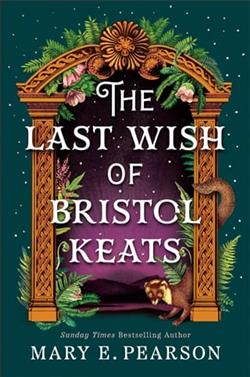
Mary E. Pearson’s The Last Wish of Bristol Keats is a compelling conclusion to the Courting of Bristol Keats duology, a series that has captivated readers with its intricate blend of romance, fantasy, and the timeless struggle between good and evil. This novel not only wraps up the narrative threads introduced in the first book but also deepens the emotional and thematic complexity of the story, leaving readers both satisfied and contemplative.
At the heart of the novel is the evolving relationship between Bristol Keats and King Tyghan. Their love story, which began under tumultuous circumstances, is tested in new and profound ways. Pearson skillfully explores the dynamics of their relationship, emphasizing the importance of trust, understanding, and sacrifice. The depth of their connection is palpable, and their journey together is both heartwarming and heart-wrenching. As they face external threats and internal conflicts, their bond becomes a beacon of hope in a world teetering on the brink of chaos.
The novel’s central theme revolves around the concept of identity and legacy. Bristol is caught between the legacy of her mother’s dark magic and her own potential for greatness. This internal struggle is mirrored in the external conflict with her mother, whose power and malevolence cast a long shadow over Bristol’s life. Pearson deftly portrays Bristol’s journey of self-discovery, as she grapples with the fear of becoming like her mother and the desire to forge her own path. This theme resonates deeply, as it speaks to the universal human experience of defining oneself amidst the expectations and influences of family and society.
Another significant theme is the notion of redemption and forgiveness. Tyghan’s encounter with his former best friend and betrayer, who also happens to be Bristol’s father, adds layers of complexity to the narrative. This subplot challenges Tyghan to confront his past and question his understanding of loyalty and betrayal. Pearson’s exploration of these themes is nuanced and thought-provoking, prompting readers to reflect on the nature of forgiveness and the possibility of redemption even in the face of deep-seated hurt and betrayal.
The world-building in The Last Wish of Bristol Keats is lush and immersive. Pearson has crafted a vivid and enchanting world in Elphame, filled with magic, danger, and intrigue. The setting serves as more than just a backdrop; it is an integral part of the story, influencing the characters’ actions and decisions. The author’s attention to detail and her ability to create a sense of place enhance the reading experience, drawing readers into a world that feels both fantastical and real.
Character development is one of Pearson’s strengths, and it is on full display in this novel. Bristol is a compelling protagonist, whose growth and transformation are central to the story. Her journey from a young woman burdened by her mother’s legacy to a powerful and self-assured leader is both inspiring and relatable. Tyghan, too, undergoes significant development, as he confronts his past and learns to navigate the complexities of love and leadership. The supporting characters, including the beloved knight whose death serves as a catalyst for much of the novel’s action, are well-drawn and add depth to the narrative.
In terms of its overall impact, The Last Wish of Bristol Keats is a satisfying conclusion to the duology. Pearson has crafted a story that is both entertaining and meaningful, with a perfect balance of action, romance, and introspection. The novel’s pacing is well-executed, with moments of tension and suspense interspersed with quieter, more reflective scenes. This balance keeps readers engaged and invested in the outcome of the story.
Comparatively, Pearson’s work can be likened to that of authors such as Sarah J. Maas and Leigh Bardugo, who are known for their ability to blend romance and fantasy with rich character development and intricate world-building. Like Maas’s A Court of Thorns and Roses series and Bardugo’s Grishaverse, Pearson’s duology offers a compelling mix of magic, romance, and adventure, appealing to fans of the genre who appreciate strong, complex female protagonists and immersive storytelling.
In conclusion, The Last Wish of Bristol Keats is a testament to Mary E. Pearson’s skill as a storyteller. It is a novel that will resonate with readers long after they have turned the last page, leaving them to ponder the nature of love, identity, and the choices that define us. For fans of romantic fantasy, this book is a must-read, offering a satisfying and thought-provoking conclusion to a captivating series.



