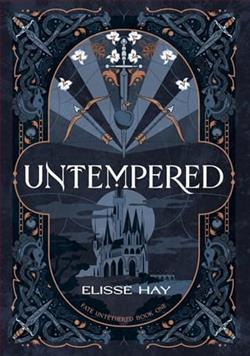
Elisse Hay’s Untempered is a compelling entry into the realm of romantasy, weaving a tale that is as much about personal liberation as it is about the broader struggle against oppressive systems. The novel is the first in the Fate Untethered trilogy, and it sets the stage for a rich narrative tapestry that combines elements of fantasy, romance, and social commentary.
At the heart of the story is Audrey, a character who embodies resilience and defiance in the face of tyranny. Her father, the Duke of La’Angi, is a figure of unrelenting cruelty, whose grip on both Audrey and the kingdom is suffocating. The Duke’s character is a classic representation of patriarchal oppression, and Hay does not shy away from exploring the depths of his villainy. This sets up a powerful contrast with Audrey, whose journey is one of self-discovery and empowerment.
One of the novel’s most intriguing aspects is its exploration of the locways, the insidious social conventions that underpin the Duke’s rule. These conventions are not just background details; they are integral to the plot and serve as a metaphor for the real-world systems that perpetuate inequality and injustice. Hay’s critique of these systems is sharp and insightful, making Untempered a story with a strong thematic backbone.
The introduction of the Matri’sion, a group of nomadic warrior women, adds another layer of depth to the narrative. They represent a counterpoint to the Duke’s oppressive regime, embodying ideals of freedom, strength, and sisterhood. Audrey’s secret training with them is a pivotal part of her character development, symbolizing her rejection of the destiny imposed upon her by her father. The Matri’sion’s philosophy, encapsulated in the proverb “The deadliest weapon is the shattered blade,” speaks to the novel’s theme of finding strength in vulnerability and brokenness.
Hay’s character development is particularly noteworthy. Audrey is a well-rounded protagonist whose internal struggles are as compelling as her external ones. Her interactions with the fierce warrior who becomes her handmaid are rich with tension and camaraderie, highlighting the importance of female solidarity in the face of patriarchal oppression. The dynamic between these two characters is one of the novel’s strengths, providing a nuanced portrayal of friendship and mentorship.
The romantic subplot, featuring a dark and brooding knight, adds an element of intrigue and complexity to the story. The romance is a slow burn, which will appeal to readers who appreciate a gradual build-up of tension and emotion. Hay handles this aspect of the narrative with care, ensuring that it complements rather than overshadows the main plot. The knight’s mysterious past and his connection to the unfolding rebellion add layers to the story, keeping readers engaged and invested in the outcome.
As the kingdom is ravaged by a mysterious plague and the threat of war looms, Audrey faces a critical choice: to seek her own freedom or to fight for the people of La’Angi. This dilemma is central to the novel’s exploration of personal versus collective responsibility. Hay deftly navigates this theme, presenting Audrey’s decision as a nuanced and deeply personal one. It is a testament to the novel’s depth that Audrey’s choice feels both inevitable and surprising, a reflection of her growth as a character.
In terms of world-building, Hay excels at creating a vivid and immersive setting. The kingdom of La’Angi is richly detailed, with its political intrigue, social hierarchies, and cultural traditions all contributing to a sense of authenticity. The presence of the plague adds a layer of urgency to the narrative, heightening the stakes and underscoring the fragility of life in this world.
Comparatively, Untempered shares thematic similarities with works like Sarah J. Maas’s Throne of Glass series and Naomi Novik’s Uprooted. Like Maas, Hay crafts a strong female protagonist who challenges the status quo, while her exploration of social conventions and personal freedom echoes the themes found in Novik’s work. However, Hay’s focus on the intersection of personal and political liberation sets her novel apart, offering a fresh perspective within the genre.
Overall, Untempered is a powerful and thought-provoking read that will resonate with fans of romantasy and those who appreciate stories of resistance and empowerment. Elisse Hay has crafted a narrative that is both entertaining and meaningful, with characters that linger in the mind long after the final page is turned. As the first installment in the Fate Untethered trilogy, it promises an exciting continuation of Audrey’s journey and the ongoing struggle against the forces that seek to bind her.
In conclusion, Untempered is a testament to the strength of the human spirit and the enduring power of hope and defiance. It is a story that challenges readers to question the systems that govern their own lives and to find the courage to forge their own paths. For those who loathe the patriarchy and believe that survival is not enough, this novel is a must-read.



