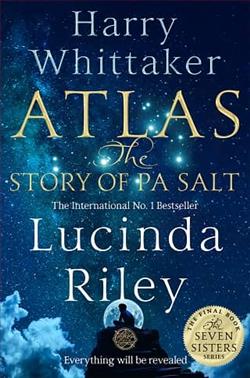
Lucinda Riley's Atlas: The Story of Pa Salt is a masterful conclusion to the beloved Seven Sisters series, a saga that has captivated readers worldwide with its intricate blend of historical fiction, mystery, and family drama. With over 35 million copies sold globally, the series has established itself as a touchstone in contemporary literature, and this final installment does not disappoint. Riley's narrative prowess shines through as she weaves together the past and present, delivering a story that is as emotionally resonant as it is thrilling.
The novel opens in 1928 Paris, where a young boy, on the brink of death, is rescued and taken in by a compassionate family. This boy, who remains nameless and silent about his origins, becomes the heart of the story. Riley skillfully crafts his character as gentle, precocious, and immensely talented, allowing readers to connect with him on a profound level. His journey from a traumatized child to a young man studying at the prestigious Conservatoire de Paris is both inspiring and heart-wrenching. The backdrop of a Europe on the cusp of war adds a layer of tension and urgency to his story, as he grapples with the haunting memories of his past and the promise he is determined to keep.
In stark contrast, the narrative shifts to 2008 in the Aegean, where the seven sisters gather aboard the Titan to bid farewell to their enigmatic father, Pa Salt. This setting serves as a poignant reminder of the series' central theme: the search for identity and belonging. The sisters, each with their own unique stories and backgrounds, are united in their love for their father, yet they are confronted with the realization that they may not have truly known him. Riley expertly uses this moment to delve into the complexities of familial relationships and the secrets that bind them.
One of the most compelling aspects of Atlas: The Story of Pa Salt is its exploration of the idea that the past is never truly behind us. As the sisters uncover clues about their father's life, they are forced to confront the possibility that his secrets could have lasting repercussions on their own lives. This theme of intergenerational impact is handled with sensitivity and depth, making it a standout element of the novel. Riley's ability to intertwine the sisters' personal journeys with the broader historical context is a testament to her skill as a storyteller.
The character development in this novel is nothing short of remarkable. Each sister is given her moment to shine, and their individual arcs are woven seamlessly into the larger narrative. Riley's attention to detail and her ability to create fully realized, multidimensional characters is evident throughout the book. The missing sister, in particular, is a fascinating addition to the story. Her role as the keeper of the clues to their past adds an intriguing layer of mystery and suspense, keeping readers engaged until the very end.
Riley's prose is both elegant and evocative, capturing the essence of each time period and setting with precision. Her descriptions of Paris in the late 1920s are lush and atmospheric, transporting readers to a world of art, music, and burgeoning political unrest. Similarly, the scenes set in the Aegean are imbued with a sense of nostalgia and longing, reflecting the sisters' emotional journey as they come to terms with their father's legacy.
In comparison to other family sagas, such as Kate Morton's The Forgotten Garden or Kristin Hannah's The Nightingale, Riley's work stands out for its intricate plotting and the sheer scope of its narrative. While Morton and Hannah excel in creating emotionally charged stories with strong female protagonists, Riley's ability to weave together multiple timelines and perspectives is unparalleled. Her commitment to historical accuracy and her deep understanding of human nature make Atlas: The Story of Pa Salt a truly unforgettable read.
Overall, Atlas: The Story of Pa Salt is a fitting conclusion to the Seven Sisters series, offering readers a satisfying resolution while leaving them with much to ponder. Its themes of love, loss, and the enduring power of family are universal, resonating with audiences across cultures and generations. Riley's legacy as a storyteller is cemented with this final installment, and her ability to craft a narrative that is both sweeping and intimate is a testament to her talent.
For fans of the series, this book is a must-read, providing closure to a story that has spanned continents and decades. For newcomers, it serves as an invitation to explore the rich tapestry of the Seven Sisters universe. In a literary landscape filled with tales of family and identity, Atlas: The Story of Pa Salt stands as a beacon of storytelling excellence, a testament to the enduring power of love and the unbreakable bonds of family.



