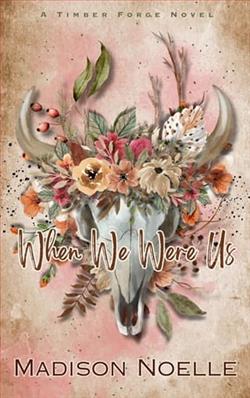
Madison Noelle's When We Were Us is a poignant exploration of love, loss, and the enduring power of second chances. Set against the evocative backdrop of Timber Forge, Montana, this novel intricately weaves the past and present, drawing readers into a world where old wounds are reopened and hearts are given the chance to heal.
The story centers around Wrenley Hardcastle and Hank Hayes, two characters whose lives were once intertwined in the throes of young love. After a seventeen-year absence, Wrenley returns to her childhood home, seeking solace from her chaotic life. Her return is marked by an unexpected reunion with Hank, the man she left behind. The narrative unfolds through alternating perspectives, allowing readers to delve deeply into the emotional landscapes of both protagonists.
Wrenley is a character who embodies resilience and vulnerability. Her return to Timber Forge is not just a physical journey but an emotional one. The familiarity of her childhood home offers a sense of comfort, yet it also brings back memories she had long buried. Noelle crafts Wrenley with a complexity that makes her relatable; she is a woman grappling with the consequences of her past decisions while trying to navigate the uncertainties of her present. Her internal conflict is palpable, and readers will find themselves rooting for her as she confronts the ghosts of her past.
Hank, on the other hand, is a character defined by his stoicism and guarded heart. The pain of Wrenley's departure has left a lasting impact on him, shaping the man he has become. His initial reluctance to engage with Wrenley is understandable, yet beneath his gruff exterior lies a deep-seated longing for what once was. Noelle skillfully peels back the layers of Hank's character, revealing a man who is both strong and tender, a man who must reconcile his past with his present desires.
The chemistry between Wrenley and Hank is electric, and Noelle captures the tension and passion between them with finesse. Their interactions are charged with emotion, and the gradual rekindling of their relationship is both believable and compelling. The author does not shy away from exploring the complexities of their feelings, and the result is a love story that feels authentic and deeply moving.
One of the novel's strengths lies in its exploration of themes of forgiveness and redemption. Both Wrenley and Hank must confront their past mistakes and learn to forgive themselves and each other. This journey towards healing is portrayed with sensitivity and depth, making it a central aspect of the narrative. Noelle's portrayal of these themes is nuanced, and she avoids clichéd resolutions, opting instead for a more realistic depiction of the challenges and triumphs of rebuilding trust.
The setting of Timber Forge adds an additional layer of richness to the story. Noelle's descriptions of the Montana landscape are vivid and evocative, providing a backdrop that enhances the emotional tone of the novel. The small-town atmosphere, with its close-knit community and familiar landmarks, serves as a reminder of the ties that bind Wrenley and Hank to their past and to each other.
In comparison to other works in the second-chance romance genre, such as Nicholas Sparks' The Notebook or Jojo Moyes' The Last Letter from Your Lover, When We Were Us stands out for its focus on character development and emotional authenticity. Noelle's writing is both lyrical and grounded, capturing the intricacies of human relationships with precision and empathy.
Overall, When We Were Us is a beautifully crafted novel that will resonate with readers who appreciate stories of love, loss, and the enduring hope of reconciliation. Madison Noelle has created a narrative that is both heartwarming and heart-wrenching, a testament to the power of love to transcend time and circumstance. This book is a must-read for anyone who has ever wondered about the road not taken and the possibility of finding one's way back to the heart's true home.



