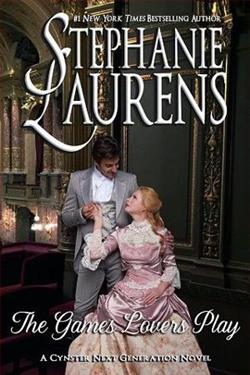
Stephanie Laurens, a master of regency romance, returns with The Games Lovers Play, a compelling addition to the Cynster series that delves into the complexities of love, trust, and self-discovery. This novel, set against the backdrop of the haut ton, explores the intricate dance between two individuals striving to overcome their internal and external barriers to achieve a love that is both profound and transformative.
At the heart of the story is Lord Devlin Cader, Earl of Alverton, and his wife, Therese Cynster. Their marriage, initially a union of convenience, is marked by a poignant irony: both partners are deeply in love with each other, yet neither has openly acknowledged it. Laurens skillfully crafts a narrative that explores the nuances of their relationship, highlighting the internal struggles and societal pressures that have kept them from fully embracing their love.
Devlin's character is a study in contrasts. On the surface, he is a successful nobleman, respected in business and political circles. However, beneath this exterior lies a man tormented by his own decisions. Laurens effectively portrays Devlin's internal conflict as he grapples with the consequences of his past actions. His journey towards self-realization is both compelling and relatable, as he seeks to rectify the emotional distance he has unwittingly created between himself and Therese.
Therese, on the other hand, is a woman of strength and resilience. Her belief that she is too "managing, bossy, and opinionated" to be truly loved is a reflection of the societal norms of the time, which Laurens critiques with subtlety and insight. Therese's character development is one of the novel's highlights, as she gradually comes to understand her own worth and the depth of Devlin's feelings for her. Her transformation from a woman resigned to a half love-match to one who demands and deserves a full partnership is both empowering and inspiring.
The themes of love and trust are intricately woven throughout the narrative. Laurens explores the idea that love is not just a feeling, but a choice that must be actively made and communicated. Devlin's realization that he can no longer deny his love for Therese is a powerful moment, underscoring the novel's central message that love, when acknowledged and nurtured, can overcome even the most formidable obstacles.
Laurens' writing is evocative and richly detailed, bringing the world of the Cynsters to life with vivid descriptions and engaging dialogue. Her ability to capture the nuances of human emotion is particularly evident in the scenes between Devlin and Therese, where the tension and longing between them are palpable. The novel's pacing is well-balanced, with moments of introspection interspersed with scenes of social intrigue and familial interactions.
In comparison to other regency romances, The Games Lovers Play stands out for its focus on the internal dynamics of a marriage rather than the initial courtship. This shift in focus allows Laurens to explore the complexities of love and commitment in a way that is both refreshing and thought-provoking. Fans of Julia Quinn's Bridgerton series or Mary Balogh's Survivor's Club series will find much to appreciate in Laurens' nuanced portrayal of relationships and her deft handling of historical context.
Overall, The Games Lovers Play is a testament to Stephanie Laurens' skill as a storyteller. Her ability to create characters who are both flawed and endearing, combined with her insightful exploration of love and trust, makes this novel a standout in the regency romance genre. It is a story that resonates on multiple levels, offering readers both a captivating romance and a profound meditation on the nature of love.
For those seeking a romance that goes beyond the superficial and delves into the heart of what it means to truly love and be loved, The Games Lovers Play is a must-read. Laurens has once again proven her mastery of the genre, delivering a tale that is as emotionally satisfying as it is beautifully written.



