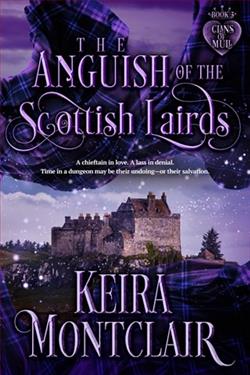
Keira Montclair's The Anguish of the Scottish Lairds is a compelling addition to the Clans of Mull series, a tapestry of historical romance interwoven with suspense, mysticism, and the rugged allure of the Scottish Highlands. This novel, like its predecessors, promises a rich blend of emotional depth and thrilling adventure, and it largely delivers on that promise.
At the heart of the story is the tumultuous relationship between Chieftain Sloan Rankin and Eva MacVey. Sloan is a character who embodies the quintessential Highland hero—strong, determined, and deeply loyal. His life has been a constant struggle to prove his worth, not only to his clan and his father but also to the woman he loves. Montclair paints Sloan with broad, vivid strokes, making him a character that readers can both admire and empathize with. His internal conflict, stemming from Eva's rejection and the mounting pressures of leadership, is portrayed with a nuanced sensitivity that adds layers to his character.
Eva MacVey, on the other hand, is a study in contrasts. Her belief in a predestined match, chosen by her late father, sets her on a path of denial and resistance against her own burgeoning feelings for Sloan. Montclair crafts Eva as a strong-willed and independent woman, qualities that are both her strength and her Achilles' heel. Her journey from denial to acceptance is a central theme of the novel, and it is handled with a deft touch that makes her transformation both believable and satisfying.
The dynamic between Sloan and Eva is the driving force of the narrative. Their relationship is fraught with tension, misunderstandings, and unspoken desires, which Montclair skillfully uses to build suspense and emotional depth. The chemistry between them is palpable, and their interactions are charged with a mix of frustration and longing that keeps the reader engaged. The author’s ability to convey the complexity of their emotions is one of the novel’s standout features.
Beyond the central romance, The Anguish of the Scottish Lairds delves into themes of duty, honor, and the struggle between personal desires and communal responsibilities. Sloan's leadership is constantly under scrutiny, and his efforts to balance his personal life with his obligations to his clan add an additional layer of tension to the story. This theme of leadership and sacrifice is a recurring motif in Montclair’s work, and it is explored with depth and insight in this installment.
Montclair also enriches the narrative with elements of Scottish folklore and mysticism. The inclusion of seers, faeries, and ghosts adds a mystical dimension to the story, enhancing its historical setting and providing a backdrop that is both enchanting and foreboding. These elements are woven seamlessly into the plot, adding intrigue and a sense of otherworldliness that complements the more grounded aspects of the story.
The novel's pacing is generally well-executed, with a balance of action, romance, and introspection. The tension escalates as Sloan and Eva find themselves imprisoned in a dungeon, a scenario that forces them to confront their feelings and make critical decisions about their future. This setting serves as a crucible for their relationship, stripping away external distractions and focusing the narrative on their emotional journey.
However, it is important to note that the novel contains themes of sexual abuse, which may be triggering for some readers. Montclair handles these themes with care, ensuring that they are integral to the plot and character development rather than gratuitous. This sensitivity is crucial in maintaining the novel’s emotional integrity and ensuring that it resonates with readers on a deeper level.
In comparison to other works in the historical romance genre, Montclair’s novel stands out for its rich character development and the depth of its emotional narrative. Authors like Diana Gabaldon, known for the Outlander series, also explore similar themes of love, duty, and the mystical elements of the Scottish Highlands. However, Montclair’s focus on the internal struggles of her characters and the intricacies of their relationships offers a more intimate portrayal of the Highland experience.
Overall, The Anguish of the Scottish Lairds is a captivating read that will appeal to fans of historical romance and those who appreciate stories with emotional depth and a touch of mysticism. Montclair’s ability to create complex characters and weave them into a narrative that is both engaging and thought-provoking is a testament to her skill as a storyteller. This novel is a worthy addition to the Clans of Mull series, and it leaves readers eager for the next installment.
For those seeking a romance that is as rugged and beautiful as the Scottish landscape, filled with suspense and emotional resonance, Keira Montclair’s latest offering is not to be missed.



