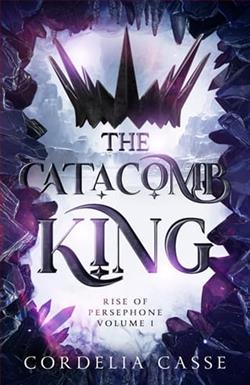
Cordelia Casse's The Catacomb King is a riveting reimagining of the classic myth of Persephone and Hades, infused with a fresh narrative that explores themes of duty, sacrifice, and the complex interplay between love and power. This novel is a compelling addition to the pantheon of mythological retellings, offering readers a darkly enchanting journey into the underworld.
At the heart of the story is Persephone, a character who defies the traditional portrayal of a passive victim. Instead, Casse crafts her as a fierce and determined protagonist, driven by a singular purpose: to save her ailing mother. This motivation is not only relatable but also serves as the catalyst for her daring incursions into the perilous borderlands of the underworld. Persephone's character development is one of the novel's strongest aspects. She begins as a desperate daughter, willing to risk everything for her family, and evolves into a formidable force, challenging the very foundations of the underworld.
Hades, the enigmatic prince of the underworld, is portrayed with a complexity that transcends the typical villain archetype. His initial portrayal as a brooding captor gradually unfolds to reveal layers of vulnerability and hidden motives. Casse skillfully navigates the delicate balance between Hades's dark allure and his underlying humanity, making him a character that readers will find themselves both wary of and drawn to. The dynamic between Persephone and Hades is electric, characterized by a tension that oscillates between animosity and a burgeoning, forbidden attraction.
The novel's thematic exploration of power dynamics is both subtle and profound. Persephone's struggle against Hades's control mirrors her internal battle with her own sense of agency. As she uncovers the secrets of the underworld, she is forced to confront the moral ambiguities of her actions and the consequences they bear. This theme is further enriched by the novel's exploration of sacrifice. Persephone's dilemma—choosing between her mother's life and the fate of two worlds—poses a poignant question about the nature of selflessness and the burdens of responsibility.
One of the most striking elements of The Catacomb King is its vivid world-building. Casse's depiction of the underworld is both haunting and mesmerizing, a place where danger lurks in every shadow and beauty is tinged with menace. The author's descriptive prose brings this subterranean realm to life, immersing readers in a landscape that is as treacherous as it is captivating. The juxtaposition of the underworld's eerie allure with the stark reality of Persephone's village creates a compelling contrast that underscores the stakes of her journey.
In terms of narrative structure, Casse employs a well-paced plot that keeps readers engaged from start to finish. The tension is expertly maintained, with each revelation and twist adding depth to the story. The stakes are continually raised, culminating in a climactic confrontation that is both thrilling and emotionally resonant. Casse's ability to weave together elements of romance, suspense, and fantasy is a testament to her storytelling prowess.
Comparatively, The Catacomb King stands alongside other notable mythological retellings, such as Madeline Miller's Circe and Sarah J. Maas's A Court of Thorns and Roses series. Like Miller, Casse breathes new life into ancient myths, offering a fresh perspective that resonates with contemporary readers. Meanwhile, her exploration of complex relationships and moral dilemmas echoes the themes found in Maas's work, appealing to fans of character-driven fantasy.
Overall, The Catacomb King is a masterful blend of myth, romance, and adventure. Cordelia Casse has crafted a tale that is both timeless and timely, inviting readers to ponder the nature of love, power, and sacrifice. Persephone's journey is one of empowerment and self-discovery, a testament to the strength of the human spirit in the face of insurmountable odds. For those seeking a story that is as thought-provoking as it is entertaining, The Catacomb King is a must-read.
In conclusion, Casse's novel is a triumph of storytelling, offering a fresh take on a beloved myth while delving into themes that resonate with modern audiences. The intricate character development, immersive world-building, and compelling narrative make The Catacomb King a standout in the realm of fantasy literature. It is a book that will linger in the minds of readers long after the final page is turned, a testament to the enduring power of myth and the transformative nature of storytelling.



