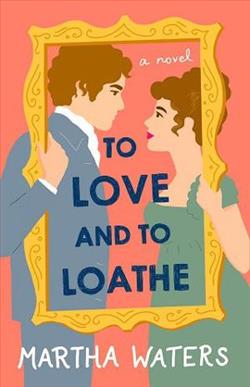
Martha Waters' To Love and to Loathe is a delightful foray into the Regency-era romance genre, offering readers a blend of wit, charm, and emotional depth. As a follow-up to her previous work, To Have and to Hoax, Waters continues to showcase her talent for crafting engaging narratives that balance humor with heartfelt moments. This novel stands out not only for its engaging plot but also for its nuanced exploration of relationships and societal expectations.
At the heart of the story are Diana, Lady Templeton, and Jeremy, Marquess of Willingham. Their dynamic is characterized by a playful antagonism that is both entertaining and endearing. The chemistry between these two characters is palpable from the outset, and Waters expertly uses their banter to build tension and intrigue. The premise of their relationship—a no-strings-attached affair born out of a wager—serves as a clever narrative device that allows the characters to explore their feelings in a setting free from societal constraints.
One of the novel's strengths is its exploration of themes such as love, trust, and self-discovery. Diana and Jeremy's journey is not just about their romantic entanglement but also about their personal growth. Diana, a widow, is portrayed as a strong, independent woman who is navigating the complexities of her social standing and personal desires. Her decision to engage in the affair with Jeremy is both a strategic move to win a wager and a bold step towards reclaiming her autonomy. This duality in her motivations adds depth to her character and makes her relatable to readers who appreciate strong female protagonists.
Jeremy, on the other hand, is a character who initially appears to be the quintessential rake—a man more concerned with his reputation and pleasures than with genuine emotional connections. However, as the story unfolds, Waters peels back the layers of his character to reveal a man who is vulnerable and seeking validation. His request for Diana's honest critique of his bedroom skills is a testament to his trust in her, and it sets the stage for his transformation throughout the novel. This character development is handled with subtlety and care, making Jeremy's journey from a superficial rake to a man capable of deep love both believable and satisfying.
The supporting characters in To Love and to Loathe also contribute significantly to the story's richness. The Dowager Marchioness of Willingham, Jeremy's grandmother, is a formidable presence whose matchmaking efforts add a layer of humor and complexity to the narrative. Her interactions with Diana and Jeremy provide insight into the societal pressures faced by individuals during the Regency era, particularly regarding marriage and social status. Waters uses these interactions to critique the rigid social norms of the time, offering a commentary that is both entertaining and thought-provoking.
In terms of style, Waters' writing is both elegant and accessible. Her use of language captures the essence of the Regency period while remaining engaging for contemporary readers. The dialogue is sharp and witty, reflecting the intelligence and humor of the characters. This balance of historical authenticity and modern sensibility is a hallmark of Waters' work and is one of the reasons why her novels resonate with a wide audience.
Comparatively, To Love and to Loathe shares similarities with the works of authors like Julia Quinn and Tessa Dare, both of whom are known for their witty and romantic Regency-era novels. However, Waters distinguishes herself through her focus on character-driven narratives and her ability to weave humor into the fabric of her stories without detracting from the emotional stakes. Her characters are not just players in a romantic plot; they are fully realized individuals with their own arcs and motivations.
The novel's impact lies in its ability to entertain while also prompting readers to reflect on the nature of love and relationships. Waters challenges the notion of love as a mere societal obligation, instead presenting it as a journey of mutual understanding and growth. This theme is particularly resonant in today's world, where the search for genuine connection often transcends traditional boundaries.
In conclusion, To Love and to Loathe is a testament to Martha Waters' skill as a storyteller. It is a novel that delights with its humor and romance while also offering a thoughtful exploration of personal and societal dynamics. Fans of Regency romance will find much to love in this book, and those new to the genre will be drawn in by its engaging characters and compelling narrative. Waters has crafted a story that is both timeless and timely, making To Love and to Loathe a must-read for anyone seeking a romance that is as intelligent as it is enchanting.



