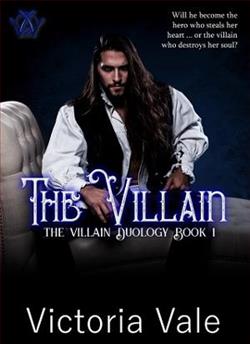
Victoria Vale's The Villain is a provocative foray into the dark and tumultuous world of Regency-era Scotland, where passion and vengeance intertwine in a narrative that challenges the boundaries of traditional romance. As the first installment in the Villain Duology, this novel sets the stage for a story that is as much about the exploration of power dynamics as it is about the complexities of human desire.
The story centers around Lady Daphne Fairchild, a character who embodies both vulnerability and resilience. Her journey from the safety of London to the untamed landscapes of Scotland is not just a physical one, but a metaphorical passage into the depths of her own psyche. Daphne's determination to confront the man responsible for her family's ruin is a testament to her courage, yet it is her willingness to enter into an indecent bargain with the enigmatic Earl of Kilmead that truly defines her character arc. This decision propels her into a world where the lines between victim and willing participant blur, creating a rich tapestry of emotional and psychological complexity.
The Earl of Kilmead, the titular villain, is a character crafted with meticulous attention to the nuances of the antihero archetype. He is a man driven by a vendetta, yet Vale skillfully peels back the layers of his motivations, revealing a depth that transcends mere villainy. His interactions with Daphne are charged with a palpable tension, a dance of power and submission that challenges the reader's perceptions of morality and consent. The Earl's character is reminiscent of other dark heroes in literature, such as Heathcliff from Emily Brontë's Wuthering Heights or the brooding Mr. Rochester from Charlotte Brontë's Jane Eyre, yet Vale infuses him with a modern sensibility that makes him uniquely compelling.
One of the most striking aspects of The Villain is its exploration of themes such as power, control, and the nature of desire. The novel does not shy away from the darker aspects of human relationships, instead embracing them with a raw honesty that is both unsettling and captivating. The concept of dubious consent is central to the narrative, and while this may be challenging for some readers, it is handled with a deftness that invites introspection rather than judgment. Vale's portrayal of the complex interplay between desire and autonomy is reminiscent of works by authors like Anne Rice, particularly her Sleeping Beauty series, which similarly delves into the erotic and the taboo.
Vale's writing is lush and evocative, painting the Scottish landscape with a vividness that mirrors the emotional intensity of the story. The wild, untamed setting serves as a perfect backdrop for the unfolding drama, its rugged beauty echoing the tumultuous relationship between Daphne and the Earl. The author's attention to historical detail adds an additional layer of authenticity, immersing the reader in a world that feels both familiar and foreign.
Character development is a strong suit of Vale's storytelling. Daphne's evolution from a sheltered noblewoman to a woman who confronts her own desires and fears is portrayed with sensitivity and depth. Her internal struggles are relatable, and her journey towards self-discovery is both poignant and empowering. Similarly, the Earl's transformation from a seemingly heartless villain to a man capable of vulnerability is handled with subtlety, allowing the reader to empathize with his plight even as they question his actions.
The novel's pacing is deliberate, allowing the tension to build gradually as the relationship between Daphne and the Earl deepens. This slow burn is effective in maintaining the reader's engagement, as each revelation adds another layer to the intricate web of deceit and desire that binds the characters together. The narrative's unpredictability keeps the reader on edge, unsure of whether the story will culminate in redemption or ruin.
In conclusion, The Villain is a bold and daring exploration of the darker facets of love and power. Victoria Vale has crafted a story that is as thought-provoking as it is seductive, challenging readers to confront their own preconceptions about romance and morality. While the themes of dubious consent and the antihero's morally ambiguous nature may not appeal to everyone, those who appreciate a complex and unconventional love story will find much to admire in this novel. With its richly drawn characters, evocative setting, and intricate plot, The Villain is a compelling addition to the genre of dark romance, standing alongside works by authors such as Pepper Winters and Skye Warren. It is a tale that lingers long after the final page is turned, leaving the reader eager for the next installment in the Villain Duology.



