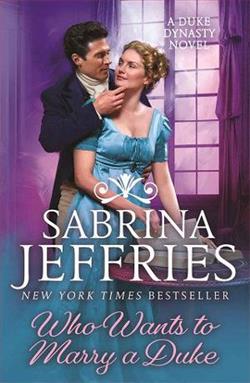
Sabrina Jeffries, a celebrated name in the realm of Regency romance, once again enchants her readers with Who Wants to Marry a Duke. This novel, part of her engaging series about a family unraveling the mysteries of their past, is a delightful blend of romance, intrigue, and historical charm. Jeffries' ability to weave a tale that is both captivating and emotionally resonant is on full display, making this book a must-read for fans of the genre.
The story centers around Marlowe Drake, the Duke of Thornstock, and Miss Olivia Norley, a woman whose passion for chemistry is as fiery as her spirit. Their past is marked by a single, unforgettable kiss that left Thorn with a bitter taste due to a subsequent blackmail scheme. This unresolved tension sets the stage for a narrative rich in both romantic and dramatic elements. Jeffries expertly crafts their relationship, allowing it to evolve from suspicion and resentment to understanding and affection.
One of the novel's most compelling aspects is its exploration of chemistry—both literal and metaphorical. Olivia's scientific pursuits are not just a backdrop but a driving force in the plot. Her determination to solve the mystery of Grey's father's death through her expertise in chemistry is a refreshing departure from the typical Regency heroine. This focus on a woman's intellectual capabilities is a nod to the evolving roles of women during the period, adding depth and modern relevance to the story.
Thorn, on the other hand, is a character who initially fits the mold of the classic rakehell. However, Jeffries peels back the layers of his persona to reveal a man shaped by past hurts and familial obligations. His journey from skepticism to trust is portrayed with nuance, making his character arc both believable and satisfying. The dynamic between Thorn and Olivia is charged with tension, humor, and eventually, a profound connection that feels earned rather than contrived.
Jeffries' skillful character development extends beyond the protagonists. The supporting cast, particularly Thorn's half-brother Grey, adds richness to the narrative. Grey's role in hiring Olivia and his own quest for truth about their father's death provides a subplot that intertwines seamlessly with the main romance. This layered storytelling is a testament to Jeffries' ability to create a world that feels lived-in and vibrant.
The novel's themes of trust, redemption, and the pursuit of truth resonate throughout the story. Jeffries deftly balances these themes with the romantic elements, ensuring that neither overshadows the other. The mystery of the potential arsenic poisoning adds an element of suspense that keeps the reader engaged, while the romance unfolds with a natural progression that is both heartwarming and exhilarating.
In comparison to other authors in the Regency romance genre, such as Sarah MacLean, Julia Quinn, and Tessa Dare, Jeffries holds her own with a distinctive voice and style. While MacLean often explores themes of empowerment and societal norms, and Quinn is known for her witty dialogue and charming characters, Jeffries excels in creating intricate plots that blend romance with mystery. Her attention to historical detail and character-driven narratives make her work stand out, appealing to readers who appreciate a well-rounded story.
Overall, Who Wants to Marry a Duke is a testament to Sabrina Jeffries' prowess as a storyteller. It is a novel that not only entertains but also challenges the conventions of its genre by presenting a heroine who defies expectations and a hero who learns to embrace vulnerability. The book's impact lies in its ability to transport readers to a world where love and science collide, and where the past is not just a shadow but a path to understanding and growth.
For those seeking a romance that is as intellectually stimulating as it is emotionally satisfying, Who Wants to Marry a Duke is an excellent choice. It is a story that lingers long after the final page is turned, a testament to the enduring power of love and the courage it takes to pursue the truth.



