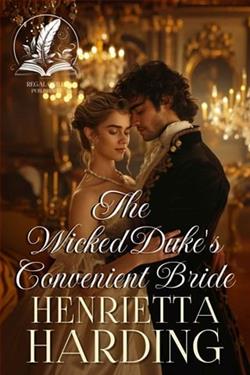
Henrietta Harding's The Wicked Duke's Convenient Bride is a compelling addition to the historical romance genre, weaving a tale of love, redemption, and the healing of wounded hearts. Set against the backdrop of Regency England, the novel explores themes of societal expectations, personal redemption, and the transformative power of love. With its engaging narrative and well-drawn characters, Harding delivers a story that is both emotionally resonant and satisfyingly romantic.
At the heart of the novel is Lady Tabitha Mayhew, a character whose journey from scandal to self-discovery is both poignant and relatable. Caught in a compromising situation, Tabitha finds herself on the brink of social ruin. Her decision to seek a marriage of convenience is a testament to her resilience and pragmatism, qualities that make her a compelling protagonist. Harding skillfully portrays Tabitha's internal struggle as she navigates the complexities of a society that is quick to judge and slow to forgive. The character's evolution from a woman seeking protection to one who embraces her desires and emotions is both believable and inspiring.
Opposite Tabitha is Matthew, the enigmatic Duke of Hillsburgh. His character is shrouded in mystery, with a past marked by loss and unresolved grief. The disappearance of his first wife has left him emotionally guarded, and his initial interest in Tabitha is purely transactional. However, as the narrative unfolds, Matthew's character is revealed to be more than just a brooding aristocrat. Harding deftly explores his internal conflict, as he grapples with his burgeoning feelings for Tabitha and the ghosts of his past. The transformation of Matthew from a man driven by duty to one who opens his heart to love is a central theme of the novel, and Harding handles it with sensitivity and depth.
The chemistry between Tabitha and Matthew is palpable from their first encounter, and Harding expertly builds the tension between them. Their relationship is a slow burn, with each character gradually lowering their defenses and allowing vulnerability to seep in. The evolution of their romance is both tender and passionate, with moments of genuine connection that are beautifully rendered. Harding's ability to capture the nuances of their relationship is one of the novel's strengths, making the reader root for their happily ever after.
Harding's narrative is enriched by her attention to historical detail, which adds authenticity to the setting and the characters' experiences. The societal norms and expectations of Regency England are woven seamlessly into the plot, providing a backdrop that enhances the stakes for both Tabitha and Matthew. The author's meticulous research is evident in the dialogue, the customs, and the vivid descriptions of the period, immersing the reader in a world that feels both familiar and intriguing.
One of the novel's most compelling aspects is its exploration of the theme of redemption. Both Tabitha and Matthew are characters marked by past wounds, and their journey towards healing is central to the story. Harding delves into the idea that love can be a catalyst for change, offering a path to redemption and a chance to rewrite one's narrative. This theme is particularly resonant in the context of the historical setting, where societal judgments were often harsh and unforgiving. Through Tabitha and Matthew's relationship, Harding suggests that true love is not only about passion but also about acceptance and forgiveness.
In comparison to other works in the historical romance genre, The Wicked Duke's Convenient Bride stands out for its character-driven narrative and emotional depth. While it shares common tropes with other novels, such as the marriage of convenience and the brooding hero, Harding's execution is both fresh and engaging. Fans of authors like Julia Quinn and Tessa Dare will find much to appreciate in Harding's nuanced characters and richly woven plot.
Moreover, the novel's resolution is both satisfying and heartwarming, delivering on the promise of a guaranteed happily ever after. Harding ties up the narrative threads with skill, ensuring that the characters' arcs are completed in a way that feels earned and authentic. The conclusion is a testament to the power of love to overcome obstacles and heal even the deepest of wounds.
In conclusion, The Wicked Duke's Convenient Bride is a beautifully crafted historical romance that offers a rich tapestry of emotion, intrigue, and passion. Henrietta Harding has created a story that resonates with themes of love, redemption, and the courage to embrace one's true self. With its well-developed characters and engaging plot, the novel is a must-read for fans of the genre and anyone looking for a story that celebrates the transformative power of love. Harding's ability to blend historical authenticity with timeless romance makes this book a standout addition to any reader's collection.



