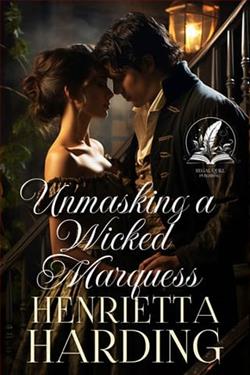
Henrietta Harding’s Unmasking a Wicked Marquess is a delightful foray into the world of historical romance, where societal expectations clash with the fiery passions of its protagonists. Set against the backdrop of the prestigious Ascot races, the novel weaves a tale of forbidden love, family feuds, and the courage to defy societal norms. With its engaging narrative and well-drawn characters, Harding delivers a story that is both captivating and emotionally resonant.
At the heart of the novel is Juliet, a young woman who has spent her life adhering to the rigid expectations of her family. Her character is introduced as someone who is dutiful and compliant, yet beneath this exterior lies a yearning for freedom and adventure. This internal conflict is beautifully portrayed, making Juliet a relatable and sympathetic character. Her transformation from a rule-abiding daughter to a woman who dares to follow her heart is one of the novel’s most compelling aspects. Harding skillfully captures Juliet’s evolution, allowing readers to witness her growth and cheer for her newfound independence.
In stark contrast to Juliet’s initial conformity is Edward, the Marquess of Ashton. Freshly returned from his travels in India, Edward is a man who embodies adventure and rebellion. His experiences abroad have left him restless and disenchanted with the rigid world of the British aristocracy. This restlessness is palpable and adds depth to his character, making him more than just a typical romantic hero. Edward’s desire to break free from societal constraints is mirrored in his pursuit of Juliet, a pursuit that is as much about love as it is about defying the expectations placed upon him.
The chemistry between Juliet and Edward is electric, and Harding does an excellent job of building tension between them. Their initial encounter at a ball, marked by an illicit kiss, sets the stage for a romance that is both passionate and fraught with obstacles. The fact that Edward is the son of Juliet’s family’s sworn enemy adds an additional layer of complexity to their relationship. This element of forbidden love is a classic trope in romance literature, but Harding manages to infuse it with freshness and vitality. The stakes are high, and the reader is kept on edge, wondering whether love will triumph over the longstanding feud.
One of the novel’s strengths is its exploration of themes such as rebellion, identity, and the courage to defy societal norms. Juliet and Edward’s journey is not just about finding love but also about discovering who they truly are and what they want from life. Their relationship challenges the status quo and forces them to confront their own beliefs and values. This theme of self-discovery is handled with nuance and depth, making the novel more than just a simple love story.
Harding’s portrayal of the societal constraints of the time is both accurate and insightful. The rigid expectations placed upon women, in particular, are highlighted through Juliet’s character. Her struggle to break free from these constraints is a reflection of the broader struggle for women’s independence and autonomy. This adds a layer of social commentary to the novel, making it relevant to contemporary readers who may see parallels in their own lives.
The setting of the Ascot races provides a vibrant and dynamic backdrop for the story. Harding’s descriptions of the races are vivid and immersive, capturing the excitement and glamour of the event. This setting also serves as a metaphor for the characters’ own race against time and societal expectations. The stakes are high, and the tension is palpable, making the novel a page-turner from start to finish.
In terms of character development, both Juliet and Edward are well-rounded and undergo significant growth throughout the novel. Their journey is believable and engaging, and their struggles and triumphs are portrayed with authenticity. The supporting characters, while not as fully developed, serve their purpose in advancing the plot and adding depth to the story. The antagonists, in particular, are suitably menacing, adding an element of danger and intrigue to the narrative.
Comparatively, Unmasking a Wicked Marquess shares thematic similarities with other historical romances, such as Julia Quinn’s Bridgerton series or Lisa Kleypas’s Wallflowers series. Like these works, Harding’s novel explores themes of love, societal expectations, and personal growth. However, Harding’s unique voice and fresh take on the enemies-to-lovers trope set her work apart. Her ability to blend romance with social commentary makes her novel both entertaining and thought-provoking.
Overall, Unmasking a Wicked Marquess is a well-crafted and engaging historical romance that will appeal to fans of the genre. Harding’s skillful storytelling, combined with her nuanced exploration of themes and well-developed characters, make this novel a standout. It is a story of love, rebellion, and the courage to defy the odds, and it is sure to leave readers both satisfied and inspired. With its guaranteed happily ever after, it is a perfect escape into a world of passion and intrigue.



