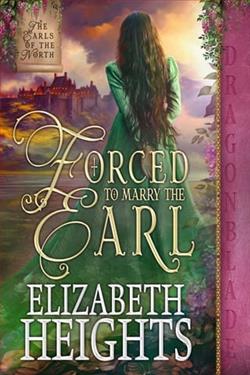
Elizabeth Heights' novel, Forced to Marry the Earl, is a captivating historical romance set in the tumultuous era of 1298 A.D. The narrative unfolds against the backdrop of medieval England, where political alliances and personal vendettas intertwine to create a rich tapestry of intrigue and passion. At its core, the book explores themes of duty, loyalty, and the transformative power of love, all while maintaining a gripping plot that keeps readers on the edge of their seats.
The story begins with the formidable warrior Otto Sarragnac, who inherits the title of Earl of Darkmoor following his father's death in battle. Otto, known as "The Feared One," is a character steeped in the traditions of the Knights' Code, which demands unwavering strength and mercilessness. However, the death of his father and the subsequent responsibilities of leadership force Otto to confront his own humanity and question the rigid principles he has always adhered to. This internal conflict is a significant driving force in the novel, as Otto grapples with the expectations of his role and the burgeoning realization that there may be more to life than the sword.
Opposite Otto stands Ariana of Kenmar, a woman of remarkable resilience and determination. Her forced marriage to Otto is not merely a political maneuver but a personal mission to rescue her beloved aunt, Ysmay, who is held captive at Darkmoor. Ariana's character is a refreshing departure from the typical damsel in distress trope often found in historical romances. Instead, she is portrayed as a strong-willed and resourceful heroine, unafraid to challenge the status quo and pursue her objectives with unwavering resolve. Her internal struggle between duty and desire adds depth to her character, making her a compelling protagonist.
The dynamic between Otto and Ariana is the heart of the novel, and Heights skillfully navigates their evolving relationship. Initially, their interactions are marked by suspicion and guardedness, as both characters are driven by their own agendas. However, as they spend more time together, a mutual respect and understanding begin to blossom. Otto's gradual transformation from a hardened warrior to a man capable of tenderness is beautifully portrayed, and Ariana's influence on him is both subtle and profound. Their relationship is a testament to the idea that love can be a catalyst for change, breaking down barriers and fostering growth.
One of the novel's strengths lies in its exploration of the theme of trust. Both Otto and Ariana are burdened by past betrayals and the weight of their respective duties, making trust a scarce commodity. Heights delves into the complexities of trust-building, illustrating how it is a gradual process that requires vulnerability and openness. The tension between Ariana's mission to rescue her aunt and her growing feelings for Otto adds an additional layer of intrigue, as readers are left wondering whether love will ultimately triumph over duty.
In terms of character development, Heights excels in crafting multidimensional characters who evolve over the course of the story. Otto's journey from a feared warrior to a compassionate leader is particularly noteworthy, as it challenges traditional notions of masculinity and power. Similarly, Ariana's transformation from a determined rescuer to a woman torn between love and loyalty is both poignant and relatable. The supporting characters, though not as prominently featured, are well-developed and contribute to the richness of the narrative.
The novel's setting is vividly depicted, with Heights' attention to historical detail immersing readers in the medieval world. The descriptions of Darkmoor's imposing fortress, the lush landscapes, and the intricacies of courtly life add depth and authenticity to the story. This meticulous world-building enhances the overall reading experience, allowing readers to fully engage with the characters and their struggles.
Comparatively, Forced to Marry the Earl shares thematic similarities with other historical romances, such as those penned by authors like Philippa Gregory and Julia Quinn. However, Heights distinguishes her work through her focus on character-driven storytelling and the exploration of complex emotional landscapes. While Gregory often delves into the political machinations of historical figures, and Quinn infuses her narratives with wit and humor, Heights strikes a balance between romance and introspection, creating a narrative that is both engaging and thought-provoking.
Overall, Forced to Marry the Earl is a compelling addition to the historical romance genre. Elizabeth Heights has crafted a story that is both entertaining and emotionally resonant, with well-drawn characters and a plot that keeps readers invested from beginning to end. The novel's exploration of themes such as duty, trust, and the transformative power of love ensures that it will resonate with a wide audience, appealing to fans of romance and historical fiction alike. For those seeking a tale of passion, intrigue, and personal growth set against the backdrop of medieval England, this book is a must-read.



