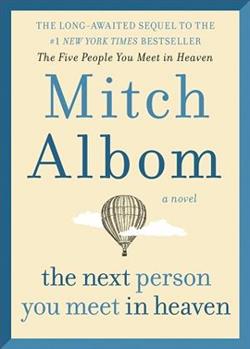
Mitch Albom’s The Next Person You Meet in Heaven is a poignant exploration of life, death, and the intricate web of connections that bind us all. As a sequel to the beloved The Five People You Meet in Heaven, this novel revisits the themes of redemption, forgiveness, and the unseen impact of our actions. Albom’s narrative continues to resonate with readers, offering a comforting yet thought-provoking perspective on the afterlife and the significance of every individual’s journey.
The story picks up with Annie, the little girl whose life was saved by Eddie, the protagonist of the first book. Annie’s life has been profoundly affected by the accident that claimed Eddie’s life. Her physical scars are mirrored by emotional ones, as she grapples with a sense of guilt and a fragmented memory of the event. Albom skillfully portrays Annie’s struggles, capturing the essence of a young woman trying to navigate a world that feels both familiar and alien.
One of the novel’s most compelling aspects is its exploration of how past traumas shape our present. Annie’s journey is a testament to the resilience of the human spirit. Her relationship with her mother, strained by guilt and misunderstanding, adds depth to her character. Albom delves into the complexities of familial bonds, illustrating how love can both wound and heal. This dynamic is reminiscent of the intricate relationships explored in other literary works, such as Jodi Picoult’s My Sister’s Keeper, where family ties are tested by extraordinary circumstances.
As Annie reconnects with Paulo, her childhood love, Albom introduces a narrative of hope and redemption. Their relationship is a beacon of light in Annie’s tumultuous life, offering her a glimpse of happiness and acceptance. However, the novel takes a dramatic turn when an accident on their wedding night propels Annie into her own heavenly journey. This plot twist is both unexpected and fitting, as it mirrors the structure of the first book, where Eddie’s death sets the stage for his celestial encounters.
Albom’s portrayal of heaven is both imaginative and comforting. He envisions it as a place where individuals are guided by five people who help them understand the significance of their earthly lives. This concept is reminiscent of the works of Paulo Coelho, particularly The Alchemist, where the protagonist’s journey is guided by spiritual mentors. In The Next Person You Meet in Heaven, Annie’s encounters with her five guides are rich with emotional depth and insight. Each meeting reveals a new layer of her life, challenging her perceptions and offering her a chance for closure.
The novel’s themes of interconnectedness and the ripple effect of our actions are beautifully illustrated through Annie’s heavenly journey. Albom emphasizes that every life matters, a message that resonates deeply in today’s world. The idea that our actions, no matter how small, can have far-reaching consequences is a powerful reminder of our shared humanity. This theme is echoed in works like Cloud Atlas by David Mitchell, where the interconnectedness of lives across time and space is a central motif.
Character development is one of Albom’s strengths, and Annie’s transformation is both believable and inspiring. Her journey from a guilt-ridden, scarred individual to someone who finds peace and understanding is a testament to Albom’s ability to craft relatable and compelling characters. The supporting characters, including Eddie, are equally well-developed, each contributing to Annie’s growth in meaningful ways.
Albom’s writing style is simple yet profound, making complex themes accessible to a wide audience. His use of vivid imagery and heartfelt dialogue enhances the emotional impact of the story. The novel’s pacing is well-balanced, with moments of introspection interspersed with dramatic events that keep readers engaged. Albom’s ability to weave together past and present, life and afterlife, is a testament to his storytelling prowess.
In conclusion, The Next Person You Meet in Heaven is a beautifully crafted sequel that stands on its own as a powerful exploration of life’s mysteries. Albom’s ability to blend the ordinary with the extraordinary creates a narrative that is both relatable and inspiring. The novel’s themes of redemption, forgiveness, and the interconnectedness of all lives offer readers a chance to reflect on their own journeys. For those who appreciated The Five People You Meet in Heaven, this sequel is a must-read, offering a fresh perspective on familiar themes. For new readers, it serves as an invitation to explore the profound questions that define our existence.
Ultimately, Albom’s work reminds us that every ending is also a beginning, and that the people we meet, both in life and beyond, shape our stories in ways we may never fully understand. The Next Person You Meet in Heaven is a testament to the enduring power of love, connection, and the human spirit.



