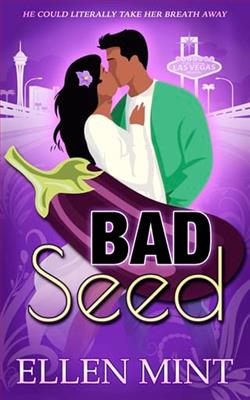
Ellen Mint's Bad Seed is a whimsical and daring foray into the world of romantic fantasy, blending the absurd with the heartfelt in a way that is both entertaining and thought-provoking. At its core, the novel explores themes of identity, belonging, and the often unpredictable nature of love, all wrapped up in a narrative that is as unique as it is engaging.
The story centers around Sadie Nair, a woman with a severe allergy to eggplant, and Aubry Gene, a man with the peculiar ability to transform into an eggplant. This unusual premise sets the stage for a narrative that is as much about the characters' internal struggles as it is about their external circumstances. Sadie's allergy is not just a quirky plot device; it symbolizes the barriers and fears that often accompany love and intimacy. Her vulnerability is palpable, making her a relatable and sympathetic character from the outset.
Aubry, on the other hand, is a character caught between two worlds. His past as an enforcer in the Nightshade Mafia haunts him, and his ability to transform into an eggplant serves as a metaphor for his feelings of alienation and the duality of his existence. The novel delves into Aubry's internal conflict, exploring his desire for a normal life and the fear that his past will always catch up with him. His relationship with Sadie becomes a beacon of hope, a chance for redemption and acceptance.
Mint's writing is both witty and poignant, capturing the absurdity of the situation while never losing sight of the emotional depth of her characters. The chemistry between Sadie and Aubry is electric, their interactions filled with humor and tension. The author skillfully balances the fantastical elements of the story with genuine emotional stakes, ensuring that the reader is invested in the characters' journey from start to finish.
One of the novel's strengths is its exploration of identity and transformation. Aubry's ability to become an eggplant is a literal manifestation of the masks we wear and the parts of ourselves we hide from the world. The narrative challenges the reader to consider what it means to be truly seen and accepted for who we are, flaws and all. This theme is further emphasized through Sadie's journey, as she learns to confront her fears and embrace the unexpected.
The supporting characters, including Aubry's loyal orange kitty, Astin, add depth and humor to the story. Astin, in particular, serves as a symbol of the unconditional love and companionship that Aubry craves. The interactions between Aubry and Astin provide moments of levity and warmth, grounding the fantastical elements of the story in genuine emotion.
While the premise of Bad Seed is undeniably unique, it shares thematic similarities with other works in the romantic fantasy genre. Fans of authors like Sarah J. Maas and Charlaine Harris may find Mint's blend of romance, fantasy, and humor appealing. However, Mint's novel stands out for its willingness to embrace the absurd and its commitment to exploring the complexities of love and identity.
In terms of character development, Mint excels at creating multidimensional characters who evolve over the course of the narrative. Sadie's journey from fear to empowerment is particularly compelling, as she learns to navigate her allergy and her feelings for Aubry. Aubry's transformation is equally satisfying, as he confronts his past and learns to accept himself and his abilities.
The novel's pacing is well-executed, with a balance of action, romance, and introspection that keeps the reader engaged. The tension between Sadie and Aubry is palpable, their relationship unfolding with a mix of passion and uncertainty that mirrors the unpredictability of love itself.
Overall, Bad Seed is a delightful and thought-provoking read that challenges conventional notions of romance and identity. Ellen Mint has crafted a story that is both entertaining and meaningful, inviting readers to consider the ways in which we transform and adapt in the pursuit of love and acceptance. With its unique premise, engaging characters, and heartfelt themes, Bad Seed is a novel that will resonate with readers long after the final page is turned.
In conclusion, Bad Seed is a testament to the power of love to transcend boundaries and defy expectations. Ellen Mint has delivered a novel that is as imaginative as it is insightful, offering a fresh take on the romantic fantasy genre. Whether you're a fan of whimsical tales or heartfelt romances, Bad Seed is a book that promises to captivate and inspire.



