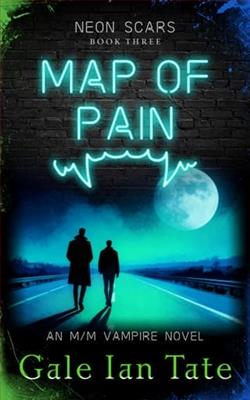
Gale Ian Tate's Map of Pain is a compelling addition to the Neon Scars series, offering readers a profound exploration of trauma, healing, and the unexpected paths to redemption. This third installment, while part of a series, stands robustly on its own, thanks to the author's thoughtful inclusion of a "For New Readers or Readers with Poor Memories" section. This ensures that even those unfamiliar with the previous books can dive into the narrative without feeling adrift.
At the heart of Map of Pain is the complex relationship between Nick Walsh and Luka Jovanovska, two characters who, on the surface, should be mortal enemies. Nick, a former member of the Daylight Society, is a seasoned monster hunter, conditioned to see creatures like Luka as threats. However, his current state is one of vulnerability—physically weakened by untreated wounds and mentally fractured by trauma. This duality of strength and fragility makes Nick a deeply compelling protagonist, as he grapples with the voices in his head and the ingrained beliefs that dictate his actions.
Luka, on the other hand, is a vampire whose silent nature belies a profound depth of empathy and understanding. His inability to speak is not a barrier but rather a unique narrative device that Tate uses to explore non-verbal communication. Through gestures and whistled melodies, Luka and Nick develop a language of their own, a testament to the novel's theme that some conversations happen without words. This silent dialogue is not just a means of communication but a bridge over the chasm of mistrust and fear that initially separates them.
The novel's exploration of trauma and healing is both sensitive and unflinching. Tate does not shy away from depicting the harsh realities of Nick's past, including the conditioning and captivity that have left indelible scars on his psyche. The content warnings provided are crucial, as the book delves into explicit themes of trauma, torture, and PTSD. However, these elements are handled with care, ensuring that they serve the narrative rather than sensationalize it.
One of the most striking aspects of Map of Pain is its portrayal of healing as a non-linear process. Nick's journey is not one of instant recovery but rather a gradual, often painful, path towards wholeness. Luka's role in this journey is pivotal, not as a savior but as a partner who offers support and understanding. Their relationship challenges the notion of love as finding one's "other half" and instead presents it as a process of helping someone become whole. This theme resonates deeply, offering a refreshing take on romance that prioritizes emotional growth and mutual healing.
In terms of character development, both Nick and Luka are richly drawn, with their individual arcs intertwining seamlessly. Nick's internal struggle with his fractured mind is portrayed with nuance, capturing the chaos and confusion that accompany trauma. Luka's silent strength and unwavering compassion provide a counterbalance, creating a dynamic that is both tender and tense. Their evolving relationship is the novel's emotional core, driving the narrative forward with a sense of urgency and hope.
Comparatively, Map of Pain shares thematic similarities with other works that explore the intersection of love and trauma, such as J.R. Ward's Black Dagger Brotherhood series or Nalini Singh's Psy-Changeling novels. However, Tate's focus on non-verbal communication and the silent language of healing sets this book apart, offering a unique perspective on the vampire-human dynamic. The novel's emphasis on music as a form of connection is particularly poignant, adding a lyrical quality to the narrative that enhances its emotional impact.
Overall, Map of Pain is a powerful exploration of the human (and inhuman) capacity for healing and connection. Gale Ian Tate has crafted a story that is both heart-wrenching and hopeful, a testament to the resilience of the human spirit and the transformative power of love. For readers seeking a romance that delves deep into the complexities of trauma and recovery, this book is a must-read. Its impact lingers long after the final page, a reminder that some love stories are indeed written in scars and song.



