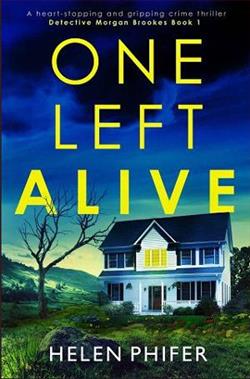
Helen Phifer's One Left Alive is a gripping and intense thriller that introduces readers to the world of rookie Detective Morgan Brookes. The novel opens with a chilling scene that sets the tone for the rest of the book: a woman found hanging from a tree in her front garden, her family missing, and a young girl barely clinging to life. This haunting image is just the beginning of a complex and emotionally charged investigation that will keep readers on the edge of their seats.
One of the most compelling aspects of One Left Alive is its exploration of the psychological toll that such a gruesome case takes on Detective Morgan Brookes. As a rookie, Morgan is still finding her footing in the world of criminal investigations, and this case becomes a baptism by fire. Her insomnia, which has her waking at 4:25 AM every day, is a testament to her dedication and obsession with solving the case. This detail not only humanizes Morgan but also adds a layer of tension to the narrative, as her exhaustion and determination become palpable.
The character development in the novel is particularly noteworthy. Morgan Brookes is a well-crafted protagonist whose vulnerabilities and strengths are intricately woven into the story. Her empathy and determination to save Bronte, the girl left alive, drive the narrative forward. Morgan's interactions with her colleagues and her internal struggles are portrayed with authenticity, making her a relatable and engaging character. The supporting characters, including Morgan's colleagues and the victims' family members, are also well-developed, adding depth to the story.
Phifer's writing style is both evocative and suspenseful, drawing readers into the dark and twisted world of the investigation. The pacing is expertly handled, with each chapter ending on a note of suspense that compels readers to keep turning the pages. The use of vivid imagery and detailed descriptions enhances the atmosphere of the novel, immersing readers in the chilling scenes of crime and investigation.
Thematically, One Left Alive delves into the complexities of family dynamics and the impact of past traumas on the present. The discovery of a link to a cold case from years ago adds an intriguing layer to the narrative, highlighting the idea that the past is never truly buried. This theme is further explored through the character of Bronte, whose survival becomes a symbol of hope and resilience amidst tragedy.
Phifer's ability to weave together multiple plot threads is commendable. The novel seamlessly transitions between the present investigation and the cold case, creating a tapestry of mystery and suspense. The revelation of the connection between the two cases is both surprising and satisfying, showcasing Phifer's skill in crafting a well-plotted thriller.
In comparison to other works in the genre, One Left Alive stands out for its emotional depth and character-driven narrative. Fans of authors like Karin Slaughter and Lisa Gardner will appreciate Phifer's ability to blend psychological insight with a gripping plot. The novel's focus on the personal and professional challenges faced by Detective Morgan Brookes adds a unique dimension to the story, setting it apart from more formulaic thrillers.
Overall, One Left Alive is a compelling and thought-provoking read that will appeal to fans of crime fiction and psychological thrillers. Helen Phifer has crafted a novel that is both a page-turner and a poignant exploration of the human psyche. With its well-developed characters, intricate plot, and atmospheric writing, One Left Alive is a standout addition to the genre and a promising start to a new series featuring Detective Morgan Brookes.
In conclusion, Helen Phifer's One Left Alive is a masterful blend of suspense, emotion, and intrigue. The novel's exploration of themes such as trauma, resilience, and the search for justice is both compelling and thought-provoking. With its strong character development and expertly crafted plot, One Left Alive is a must-read for fans of the genre and a testament to Phifer's talent as a storyteller.



