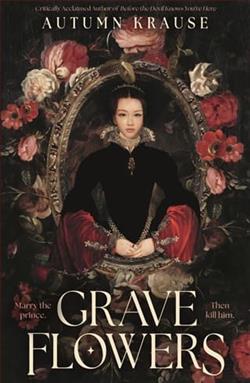
Autumn Krause's Grave Flowers is a captivating tale that intertwines themes of familial duty, personal identity, and the moral complexities of power and ambition. The novel is set in a richly imagined world where the Sinet family, known for their unscrupulous reputation, seeks to elevate their status through a dangerous alliance. At the heart of this narrative is Princess Madalina, a character whose journey from a perceived weakness to a formidable strength is both compelling and thought-provoking.
The story begins with a striking premise: Marry the prince, then kill him. This sets the stage for a narrative filled with intrigue and suspense. Madalina, unlike her twin sister Inessa, is seen as the weaker sibling, more attuned to the magical flowers she tends in the garden than to the political machinations of her family. These flowers, known as "grave flowers," are symbolic of Madalina's own dual nature—beautiful yet deadly, underestimated yet powerful.
Krause skillfully develops Madalina's character, portraying her as a young woman torn between her familial obligations and her personal desires. Her internal conflict is palpable as she grapples with the task of taking her sister's place as Prince Aeric's bride-to-be, while also being burdened with the mission to assassinate him. This duality is a recurring theme throughout the novel, as Madalina must navigate the treacherous waters of court politics while staying true to herself.
The relationship between Madalina and Inessa is central to the narrative. Born attached at the hand and separated shortly after, the twins have never truly connected. This physical and emotional separation is emblematic of the larger themes of identity and autonomy that Krause explores. Madalina's quest to free her sister from the purgatory of Bide becomes a metaphor for her own journey towards self-discovery and empowerment.
Prince Aeric, the intended target of Madalina's mission, is portrayed as an "infuriatingly clever" character whose charm and intelligence make him both a formidable opponent and an intriguing love interest. Krause deftly handles the tension between Madalina and Aeric, creating a dynamic that is as much about mutual respect and understanding as it is about deception and betrayal. This complexity adds depth to their interactions, making their evolving relationship one of the highlights of the novel.
The themes of power and ambition are woven throughout the narrative, as Madalina must contend with the expectations of her family and the treacherous politics of the court. Krause does not shy away from exploring the moral ambiguities of her characters' actions, challenging readers to consider the cost of ambition and the sacrifices made in the pursuit of power. This is particularly evident in the character of Inessa, whose willingness to manipulate and deceive for the sake of her family's ambitions serves as a stark contrast to Madalina's more introspective nature.
In terms of world-building, Krause excels at creating a setting that is both atmospheric and immersive. The kingdom of Sinet, with its damp, mold-filled palace walls, serves as a fitting backdrop for a story steeped in deceit and intrigue. The magical elements, particularly the grave flowers, are seamlessly integrated into the narrative, enhancing the sense of wonder and danger that permeates the novel.
Comparatively, Grave Flowers shares thematic similarities with other works in the fantasy genre, such as Sarah J. Maas's Throne of Glass series and Leigh Bardugo's Shadow and Bone trilogy. Like these authors, Krause explores the complexities of power, identity, and loyalty, while also crafting a story that is uniquely her own. Her focus on the bond between sisters and the moral dilemmas faced by her protagonist sets Grave Flowers apart, offering readers a fresh perspective on familiar themes.
Overall, Grave Flowers is a beautifully written and intricately plotted novel that will appeal to fans of fantasy and character-driven stories. Krause's ability to blend elements of romance, suspense, and magic into a cohesive and engaging narrative is a testament to her skill as a storyteller. The novel's exploration of identity, power, and the bonds of family is both timely and timeless, making it a compelling read for anyone seeking a story that challenges and entertains in equal measure.
In conclusion, Autumn Krause has crafted a novel that is as enchanting as it is thought-provoking. Grave Flowers is a testament to the power of storytelling, offering readers a journey that is as much about self-discovery as it is about the external challenges faced by its characters. With its richly developed characters, intricate plot, and evocative themes, Grave Flowers is a must-read for anyone who appreciates the art of fantasy storytelling.



