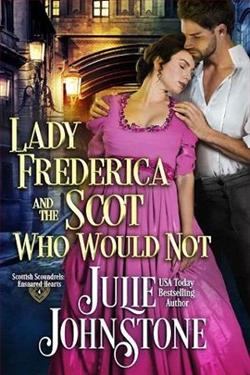
Julie Johnstone's Lady Frederica and the Scot Who Would Not is a delightful foray into the world of historical romance, where the rigid structures of the aristocracy clash with the vibrant, unpredictable world of Covent Garden. This novel is a testament to Johnstone's ability to weave a tale that is both engaging and thought-provoking, offering readers a journey filled with passion, danger, and the timeless struggle between societal expectations and personal desires.
At the heart of the story is Lady Frederica Darlington, a character who defies the conventions of her time. Unlike the typical heroines of Regency romances, Frederica is neither prim nor obedient. Her refusal to conform to societal norms is both refreshing and empowering, making her a standout character in a genre often populated by more traditional figures. Frederica's desire to carve out her own path in life, away from the constraints of marriage and societal expectations, is a theme that resonates deeply with modern readers. Her determination to find a place where she truly belongs, in the bohemian world of Covent Garden, adds depth to her character and sets the stage for a compelling narrative.
Opposite Frederica is Gabriel Beckford, the enigmatic King of the Underworld. Gabe's character is a study in contrasts; he is both a protector and a man haunted by his past. His rule of never getting close to anyone is a defense mechanism born out of necessity, given the enemies he has accumulated over the years. Gabe's internal struggle is palpable, and Johnstone does an excellent job of peeling back the layers of his character to reveal a man who is both vulnerable and fiercely protective. The chemistry between Gabe and Frederica is electric, and their interactions are charged with tension and unspoken desire.
The novel's plot is driven by the collision of these two strong-willed characters, each with their own set of goals and fears. Frederica's reckless nature and Gabe's guarded demeanor create a dynamic that is both entertaining and emotionally resonant. As their paths intertwine, the stakes are raised, and the threat of Gabe's enemy looms large. This external conflict serves as a catalyst for the characters' development, forcing them to confront their fears and insecurities.
One of the most compelling aspects of Lady Frederica and the Scot Who Would Not is its exploration of trust and vulnerability. Both Frederica and Gabe must learn to trust themselves and each other, a journey that is fraught with challenges and revelations. Johnstone skillfully navigates this theme, allowing her characters to grow and evolve in a way that feels authentic and satisfying. The novel's resolution is both poignant and uplifting, offering a message of hope and the transformative power of love.
In terms of character development, Johnstone excels at creating multi-dimensional characters who are relatable and engaging. Frederica's journey from a headstrong, independent woman to someone who learns the value of partnership and trust is beautifully portrayed. Similarly, Gabe's transformation from a solitary figure to a man willing to open his heart is handled with nuance and sensitivity. The supporting characters, though not as prominently featured, add depth and richness to the story, enhancing the overall narrative.
Comparatively, Johnstone's work can be likened to that of other historical romance authors such as Lisa Kleypas and Sarah MacLean, who also excel in crafting strong, independent heroines and complex, brooding heroes. However, Johnstone's unique voice and her ability to blend romance with elements of suspense and intrigue set her apart. Her attention to historical detail and her ability to create a vivid, immersive setting further enhance the reading experience.
The overall impact of Lady Frederica and the Scot Who Would Not is one of satisfaction and reflection. The novel not only entertains but also prompts readers to consider the constraints of societal norms and the courage it takes to defy them. Frederica and Gabe's story is a testament to the power of love to overcome obstacles and the importance of staying true to oneself.
In conclusion, Julie Johnstone has crafted a captivating tale that will resonate with fans of historical romance and newcomers to the genre alike. Lady Frederica and the Scot Who Would Not is a story of passion, danger, and the transformative power of love, set against the backdrop of a vividly rendered historical setting. It is a novel that invites readers to lose themselves in its pages and emerge with a renewed appreciation for the complexities of love and the courage it takes to pursue one's own path.



