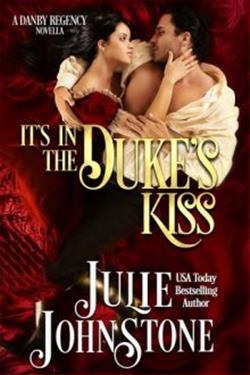
Julie Johnstone's It's In The Duke's Kiss is a delightful foray into the world of Regency romance, where societal expectations and personal desires often find themselves at odds. The novel is a captivating exploration of love, duty, and self-discovery, set against the backdrop of a society that demands conformity yet is ripe with the potential for rebellion. Through the lens of Lady Emmaline Radcliffe and Lucian, the Duke of Blackbourne, Johnstone crafts a narrative that is both engaging and thought-provoking.
At the heart of the story is Lady Emmaline Radcliffe, a character who embodies the spirit of independence and defiance against societal norms. From the outset, Emma is portrayed as a woman who knows her own mind, a refreshing departure from the typical Regency heroine. Her reluctance to marry someone who adheres strictly to societal rules is a central theme, and it is this desire for autonomy that propels her into the arms of the Duke of Blackbourne. Emma's character development is one of the novel's strongest points. Her journey from a woman with a girlhood infatuation to someone who questions her desires and ultimately finds her own path is both believable and inspiring.
Lucian, the Duke of Blackbourne, is a character who initially appears to be the epitome of the stuffy, proper aristocrat. However, as the story unfolds, Johnstone peels back the layers of his character to reveal a man who is far more complex than he seems. Lucian's internal struggle between duty and desire is a compelling aspect of the narrative. His role as the keeper of his irresponsible brother adds depth to his character, highlighting his sense of responsibility and the burden it places on him. The evolution of Lucian's character is skillfully handled, as he transitions from a man bound by duty to one who embraces his own desires and emotions.
The chemistry between Emma and Lucian is palpable from their first encounter. Johnstone expertly crafts their interactions, allowing their relationship to develop naturally and believably. The tension between them is electric, and their banter adds a layer of wit and charm to the narrative. As they navigate their feelings for each other, the reader is drawn into their world, rooting for their eventual union. The romance is both tender and passionate, a testament to Johnstone's ability to write compelling love stories.
One of the novel's most intriguing aspects is its exploration of societal expectations and the pressure to conform. Emma's struggle against her mother's insistence on a suitable match and Lucian's role as his brother's keeper are reflective of the broader societal pressures faced by individuals during the Regency period. Johnstone uses these themes to highlight the constraints placed on personal freedom and the courage required to defy them. The novel's resolution, which sees both Emma and Lucian breaking free from these constraints, is a satisfying conclusion that reinforces the importance of staying true to oneself.
In comparison to other Regency romances, It's In The Duke's Kiss stands out for its strong character development and its focus on themes of independence and self-discovery. While many novels in the genre focus solely on the romance, Johnstone's work delves deeper, offering readers a more nuanced and layered narrative. Fans of authors like Julia Quinn and Tessa Dare will find much to appreciate in Johnstone's writing, which combines the wit and charm of Quinn with the emotional depth of Dare.
Overall, It's In The Duke's Kiss is a captivating and well-crafted novel that will appeal to fans of Regency romance and those looking for a story with strong, relatable characters and a meaningful exploration of societal themes. Julie Johnstone has created a world that is both familiar and fresh, offering readers a chance to escape into a story that is as thought-provoking as it is romantic. Whether you're a longtime fan of the genre or a newcomer, this novel is sure to leave a lasting impression.



