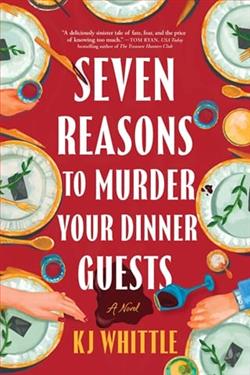
K.J. Whittle's Seven Reasons to Murder Your Dinner Guests is a gripping exploration of mortality, fate, and the human psyche, wrapped in the guise of a suspenseful mystery. The novel's premise is both intriguing and chilling: seven strangers, an enigmatic dinner party, and a series of cards predicting the age of each guest's death. This setup immediately hooks the reader, promising a narrative filled with tension and existential dread.
The novel's structure is one of its most compelling aspects. Told from the perspectives of each of the seven guests, Whittle masterfully weaves together multiple narratives, each offering a unique lens through which to view the unfolding events. This multi-perspective approach not only enriches the story but also deepens our understanding of each character, making their fears and motivations palpable. As the story progresses, the reader becomes intimately acquainted with the guests, each of whom is vividly drawn and distinct in their own right.
Character development is a standout feature of this novel. Whittle excels at crafting complex, believable characters who are forced to confront their own mortality. The guests are not mere archetypes; they are fully fleshed-out individuals with their own histories, secrets, and desires. As the narrative unfolds, we see how the knowledge of their impending deaths affects each character differently. Some are driven to desperation, others to introspection, and a few to reckless abandon. This exploration of human behavior in the face of death is both fascinating and unsettling, prompting readers to reflect on their own lives and choices.
One of the novel's central themes is the concept of fate versus free will. The cards, with their ominous predictions, serve as a catalyst for the characters to question whether their destinies are predetermined or if they have the power to change their fates. This theme is skillfully interwoven throughout the narrative, creating a tension that keeps the reader engaged. Whittle raises profound questions about the nature of life and death, encouraging readers to ponder what they would do if they knew the exact moment of their demise.
The pacing of Seven Reasons to Murder Your Dinner Guests is expertly handled. Whittle maintains a steady rhythm, gradually building suspense as the guests' numbers begin to dwindle. The novel's atmosphere is thick with tension, and the sense of impending doom is palpable. Each death is a reminder of the stakes at play, and the mystery of who—or what—is behind the deadly dinner party keeps the reader guessing until the very end.
Whittle's prose is both elegant and evocative, capturing the mood of the story with precision. The dialogue is sharp and realistic, revealing the characters' personalities and emotions without resorting to exposition. The descriptions of the dinner party and its aftermath are vivid, immersing the reader in the world Whittle has created. The author's ability to balance suspense with introspection is commendable, making for a novel that is as thought-provoking as it is thrilling.
In terms of its overall impact, Seven Reasons to Murder Your Dinner Guests is a novel that lingers in the mind long after the final page is turned. It is a story that challenges readers to confront their own mortality and consider how they would live if they knew their time was limited. The novel's exploration of human nature, combined with its suspenseful plot, makes it a compelling read that is difficult to put down.
Comparatively, Whittle's novel shares thematic similarities with works like Agatha Christie's And Then There Were None and Ruth Ware's The Death of Mrs. Westaway. Like Christie, Whittle employs a closed-circle mystery, where the characters are isolated and must solve the mystery themselves. However, Whittle adds a unique twist with the element of the death-predicting cards, which introduces a supernatural or psychological dimension to the story. This blend of mystery and existential inquiry sets Whittle's work apart, offering a fresh take on the genre.
In conclusion, Seven Reasons to Murder Your Dinner Guests is a masterful novel that combines elements of mystery, suspense, and philosophical inquiry. K.J. Whittle has crafted a story that is both entertaining and thought-provoking, with well-developed characters and a plot that keeps readers on the edge of their seats. It is a book that will appeal to fans of mystery and psychological thrillers, as well as those who enjoy stories that delve into the deeper questions of life and death. Whittle's novel is a testament to the power of storytelling to both entertain and enlighten, making it a must-read for anyone seeking a captivating and meaningful literary experience.



