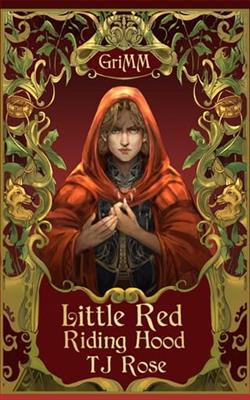
T.J. Rose's Little Red Riding Hood offers a fresh and compelling twist on the classic fairy tale, transforming it into a richly woven narrative that explores themes of identity, trust, and the complexities of human (and non-human) relationships. This reimagining is not just a simple retelling; it is a deep dive into the psyche of its characters, set against the backdrop of a kingdom on the brink of despair.
At the heart of the story is Red, a character who defies the traditional damsel-in-distress trope. Raised in The Queen’s court, Red is an outsider, marked by his mismatched eyes and a sharp tongue that keeps others at bay. This characterization is a refreshing departure from the passive protagonists often found in fairy tales. Red is not just a character to be rescued; he is a proactive agent in his own story, driven by a mission to save his kingdom from a devastating famine.
The narrative thrust of the book is Red's journey towards the Dark Forest, a place teeming with danger and mystery. It is here that he encounters Wilhelm ‘Wim’ Hoffmann, a massive grey wolf who is as enigmatic as he is dangerous. Wim is a character shrouded in secrets, and his initial portrayal as a potential threat adds a layer of tension to the story. However, as the narrative unfolds, Wim's character is revealed to be more complex than a mere antagonist. His interactions with Red are charged with a palpable tension, a mix of danger and allure that keeps readers on edge.
One of the book's most compelling themes is the exploration of trust and the nature of alliances. Red and Wim's relationship is fraught with uncertainty, as Red grapples with his instincts to distrust a creature as wild and unpredictable as a wolf. Yet, as they face shared dangers—slave traders and bandits lurking in the woods—their bond deepens. This evolution of their relationship is handled with nuance, avoiding the pitfalls of cliché romance. Instead, it becomes a study of how trust is built in the most unlikely of circumstances.
The theme of identity is also central to the narrative. Red's journey is not just a physical one; it is a quest for self-discovery. Abandoned as a child and raised in a court where he never truly belonged, Red's venture into the forest becomes a metaphor for his search for belonging and understanding of who he is. This internal conflict is mirrored in Wim, whose secrets and past are as dark and tangled as the forest itself. Together, they navigate not just the physical dangers of the woods, but also the emotional landscapes of their own identities.
Rose's writing is evocative, painting the Dark Forest as a character in its own right. The setting is lush and atmospheric, with descriptions that bring the forest to life in vivid detail. This immersive world-building enhances the story's impact, making the reader feel the chill of the forest nights and the ever-present threat lurking in the shadows.
In comparison to other reimaginings of fairy tales, such as Marissa Meyer's Cinder or Naomi Novik's Uprooted, Rose's Little Red Riding Hood stands out for its focus on character development and the intricate dynamics of its central relationship. While Meyer's work often leans towards the sci-fi genre and Novik's towards fantasy, Rose's narrative is grounded in the emotional and psychological, offering a more intimate exploration of its characters' journeys.
Overall, T.J. Rose's Little Red Riding Hood is a captivating read that breathes new life into a well-worn tale. It challenges the reader to reconsider the nature of the stories we think we know, offering a narrative that is as much about the journey within as it is about the journey through the forest. With its richly developed characters, evocative setting, and themes that resonate on multiple levels, this book is a must-read for fans of fairy tale retellings and anyone who appreciates a story that delves into the heart of what it means to be human—or wolf.



