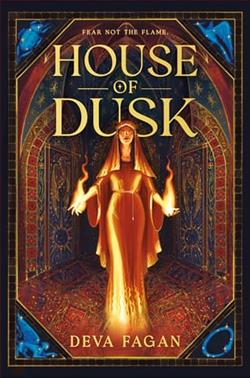
Deva Fagan's House of Dusk is a captivating addition to the realm of epic fantasy, weaving a tale that is as much about personal redemption and forbidden love as it is about the grander themes of war and divine intervention. The novel stands out with its unique blend of romance, mythology, and political intrigue, making it a compelling read for fans of authors like Tasha Suri, Samantha Shannon, and Shannon Chakraborty.
At the heart of the story is Sephre, a character whose complexity is both her strength and her burden. Once a celebrated war hero, Sephre's decision to take holy vows is a testament to her desire for redemption. Her journey is one of self-discovery and reconciliation with her past, as she grapples with the flames of the Phoenix—a symbol of both her power and her guilt. Fagan skillfully portrays Sephre's internal conflict, making her a deeply relatable character. Her struggle to balance her past actions with her present duties adds a layer of depth to the narrative, inviting readers to ponder the nature of redemption and forgiveness.
In contrast, Yeneris offers a different perspective on duty and loyalty. Orphaned by the very war Sephre helped win, Yeneris's life has been one of training and subterfuge. Her role as a spy in the enemy's palace is fraught with danger, yet it is her growing attraction to Princess Sinoe that truly complicates her mission. Fagan crafts Yeneris's character with a deft hand, exploring the tension between personal desire and duty to one's people. The romance between Yeneris and Sinoe is tenderly developed, providing a poignant counterpoint to the novel's darker themes.
The world-building in House of Dusk is nothing short of exquisite. Fagan creates a rich, mythic world where gods and mortals coexist in a delicate balance. The rising corpses and shadowy serpents from the underworld add an element of horror and suspense, while the long-dead god's stirring presence looms ominously over the narrative. This intricate setting serves as a backdrop for the characters' personal struggles, enhancing the story's emotional impact.
Fagan's prose is both lyrical and brisk, propelling the narrative forward while allowing for moments of introspection and character development. The pacing is well-balanced, with action sequences interspersed with quieter, more contemplative scenes. This rhythm keeps the reader engaged, while also providing space for the exploration of the novel's central themes.
One of the most striking aspects of House of Dusk is its exploration of complex relationships. The bond between Sephre and Yeneris, though initially adversarial, evolves into one of mutual respect and understanding. Their interactions are charged with tension and empathy, reflecting the broader conflicts between their respective peoples. Similarly, the relationship between Yeneris and Sinoe is fraught with political implications, yet it is also deeply personal and affecting. Fagan navigates these dynamics with sensitivity and nuance, creating a tapestry of connections that enrich the narrative.
In comparison to other works in the genre, House of Dusk holds its own with its unique blend of romance and fantasy. Fans of Tasha Suri's Empire of Sand will appreciate the novel's focus on personal redemption and divine intervention, while those who enjoyed Samantha Shannon's The Priory of the Orange Tree will find a similar depth of world-building and character development. Shannon Chakraborty's Daevabad Trilogy fans may also find resonance in the novel's exploration of political intrigue and cultural conflict.
Overall, House of Dusk is a standout in the epic fantasy genre, offering a rich and immersive experience that is both thought-provoking and emotionally resonant. Deva Fagan has crafted a tale that is as much about the power of love and redemption as it is about the epic battles between gods and mortals. The novel's themes of forgiveness, duty, and the complexity of human relationships are universal, making it a story that will linger in the minds of readers long after the final page is turned.
In conclusion, House of Dusk is a must-read for fans of epic fantasy and romantic fiction alike. Its compelling characters, intricate world-building, and exploration of profound themes make it a novel that is both entertaining and enlightening. Deva Fagan has truly created a masterpiece that will captivate readers and leave them eagerly anticipating her next work.



