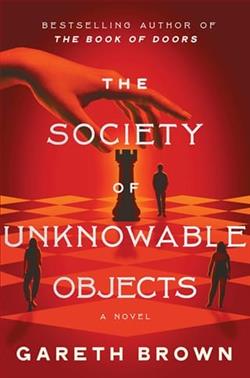
Gareth Brown's The Society of Unknowable Objects is a captivating journey into a world where the mundane and the magical coexist in a delicate balance. This novel, a standalone follow-up to Brown's acclaimed The Book of Doors, delves into the lives of three seemingly ordinary individuals who are part of a clandestine society dedicated to safeguarding magical artifacts. These artifacts, while appearing ordinary, possess extraordinary powers that could alter the fabric of reality if left unchecked.
The narrative begins with an intriguing premise: the world of magical objects has been dormant for years, yet the Society of Unknowable Objects remains vigilant. The society's members, meeting in the shadowy confines of a London bookshop's basement, are tasked with protecting these artifacts from falling into the wrong hands. This setup immediately draws readers into a world that is both familiar and fantastical, where the line between reality and magic is blurred.
At the heart of the story is Magda Sparks, the newest member of the society and a writer by profession. Her character is a refreshing blend of curiosity, intelligence, and vulnerability. Brown crafts Magda with a depth that makes her relatable, yet her involvement in the society adds layers of complexity to her character. Her journey from London to Hong Kong and then across the Atlantic to the United States is not just a physical one but also a journey of self-discovery. As she navigates the dangers posed by a professional killer and uncovers secrets about her own family's legacy, Magda evolves into a formidable protagonist.
One of the novel's strengths lies in its exploration of themes of secrecy and truth. The society's mission is shrouded in mystery, and as Magda delves deeper, she realizes that the most dangerous secrets are those kept within the society itself. This theme resonates with the reader, prompting reflection on the nature of truth and the lengths to which individuals and organizations will go to protect it. Brown skillfully weaves this theme into the narrative, creating a tension that propels the story forward.
The novel also touches on the idea of legacy and inheritance. Magda's discovery of her family's connection to the society adds a personal dimension to her quest. This subplot enriches the narrative, providing a backdrop against which Magda's actions and decisions are cast. It raises questions about the responsibilities that come with knowledge and power, and whether one can ever truly escape the shadows of the past.
Brown's writing is both evocative and immersive. His descriptions of the various settings—from the bustling streets of Hong Kong to the mysterious depths of the American South—are vivid and atmospheric. The pacing of the novel is well-balanced, with moments of intense action interspersed with quieter, introspective scenes that allow for character development and thematic exploration.
In terms of character development, Brown excels in creating a cast of multidimensional characters. Frank Simpson, the longest-standing member of the society, is portrayed with a sense of gravitas and wisdom, yet he is not without his own secrets and flaws. The dynamics between the society's members are complex, with trust and betrayal playing pivotal roles in the unfolding drama. The antagonist, a professional killer with a personal vendetta, is both menacing and enigmatic, adding an element of suspense and danger to the narrative.
Comparatively, The Society of Unknowable Objects shares thematic similarities with works like Neil Gaiman's Neverwhere and Susanna Clarke's Jonathan Strange & Mr Norrell, where the ordinary world is interwoven with the magical. However, Brown's novel stands out for its focus on the moral and ethical implications of possessing and protecting magical knowledge. The novel's exploration of truth and secrecy sets it apart, offering a fresh perspective on the genre.
Overall, The Society of Unknowable Objects is a thought-provoking and engaging read that will appeal to fans of fantasy and mystery alike. Gareth Brown has crafted a story that is both entertaining and intellectually stimulating, with a protagonist who is as compelling as the magical world she inhabits. The novel's exploration of themes such as truth, legacy, and the nature of power ensures that it resonates long after the final page is turned. For readers seeking a blend of magic, mystery, and introspection, this novel is a must-read.



