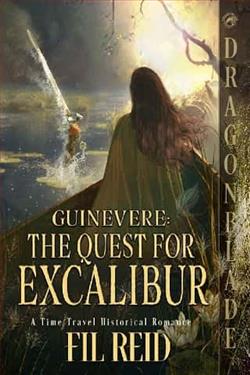
Fil Reid's The Quest for Excalibur, the fifth installment in the award-winning historical romance series based on Arthurian legend, continues to enchant readers with its unique blend of time-travel, romance, and mythological intrigue. This novel is a testament to Reid's ability to weave a compelling narrative that not only respects the rich tapestry of Arthurian lore but also breathes new life into it through the eyes of a modern protagonist.
The story centers around Gwen, a 21st-century librarian who has chosen to remain in the Dark Ages with her husband, King Arthur. This decision, made twelve years prior, sets the stage for a narrative that explores themes of love, sacrifice, and the inexorable march of fate. Gwen's journey is one of adaptation and resilience, as she navigates the challenges of living in a time far removed from her own, all while trying to alter the course of history to save Arthur from his legendary fate.
One of the most compelling aspects of The Quest for Excalibur is its exploration of the tension between destiny and free will. Gwen's foreknowledge of Arthurian legend serves as both a guide and a burden. She is acutely aware that her actions may be futile against the backdrop of a fate that seems preordained. This theme is poignantly illustrated through Gwen's internal struggle, as she grapples with the possibility that her efforts to save Arthur might be in vain. Reid masterfully captures this existential dilemma, adding depth to Gwen's character and enriching the narrative.
Character development is a standout feature of this novel. Gwen is portrayed as a strong, intelligent woman who is deeply in love with Arthur, yet fully aware of the limitations imposed by the era in which she lives. Her modern sensibilities often clash with the Dark Age worldview, creating a dynamic tension that adds complexity to her relationship with Arthur. Reid's portrayal of Gwen is nuanced and empathetic, making her a relatable and compelling protagonist.
Arthur, on the other hand, is depicted as a man caught between his legendary status and his human vulnerabilities. Reid skillfully humanizes this iconic figure, allowing readers to see beyond the myth and understand the man. Arthur's interactions with Gwen reveal a deep, abiding love, but also highlight the challenges they face as a couple from different worlds. This duality adds richness to their relationship and underscores the novel's central theme of love transcending time and circumstance.
The supporting characters are equally well-developed, with Morgana and Medraut playing pivotal roles in the unfolding drama. Morgana's malevolent influence looms large over the narrative, her machinations adding an element of suspense and danger. Medraut, Arthur's nephew, is a fascinating character whose subtle manipulation of those around him sets the stage for future conflict. Reid's ability to craft multidimensional antagonists enhances the story's complexity and keeps readers engaged.
Reid's prose is both lyrical and evocative, capturing the essence of the Dark Ages while imbuing the narrative with a sense of timelessness. Her attention to historical detail is commendable, providing a vivid backdrop against which the story unfolds. The descriptions of the hilltop fortress of Din Cadan, the harshness of the winter, and the vibrant performances of the traveling players all contribute to a richly immersive reading experience.
In terms of thematic depth, The Quest for Excalibur delves into the nature of power and its corrupting influence. The novel explores how ambition and the desire for control can lead to betrayal and tragedy, a theme that resonates with contemporary readers. This exploration is particularly evident in the character of Medraut, whose actions foreshadow the cataclysmic events to come in the series' final installment, The Road To Avalon.
Comparatively, Reid's work stands alongside other modern retellings of Arthurian legend, such as Marion Zimmer Bradley's The Mists of Avalon and Bernard Cornwell's The Warlord Chronicles. However, Reid distinguishes herself by focusing on the perspective of a modern woman navigating the complexities of a legendary past. This unique angle offers fresh insights into familiar tales, making The Quest for Excalibur a standout in the genre.
Overall, The Quest for Excalibur is a captivating addition to Fil Reid's series, offering a rich tapestry of romance, intrigue, and myth. Its exploration of timeless themes, coupled with well-drawn characters and a vividly realized setting, ensures that it will resonate with fans of historical romance and Arthurian legend alike. Reid's ability to balance the fantastical with the relatable makes this novel a compelling read, one that leaves readers eagerly anticipating the series' conclusion.



