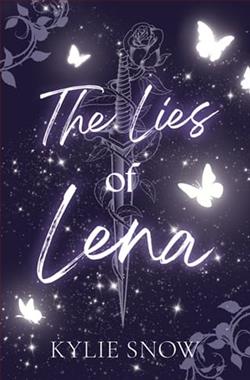
Kylie Snow's The Lies of Lena is a compelling fantasy novel that delves into themes of identity, discrimination, and the quest for freedom. Set in the richly imagined world of Tovagoth, where Mages live under constant threat, the book offers a poignant exploration of what it means to hide one's true self in a society that fears and persecutes difference.
The narrative is anchored by the character of Lena Daelyra, a Mage who has lived her life in the shadows, constantly wary of the dangers that lurk around every corner. Snow crafts Lena with a depth that makes her struggles and fears palpable. Her journey from a life of fear to one of empowerment is both inspiring and heart-wrenching. Lena's internal conflict, the tension between her desire for self-preservation and her yearning for acceptance, is a central theme that resonates throughout the novel. Her relationship with Quill Callon, a resident of the Inner Ring who becomes her mentor in weaponry, adds layers to her character. Quill is not just a love interest but a catalyst for Lena's transformation, challenging her to confront her fears and embrace her identity.
Quill himself is a well-rounded character, whose initial role as a mentor evolves into something more complex as the story progresses. His interactions with Lena are filled with tension and tenderness, making their relationship one of the highlights of the book. Snow skillfully avoids the trope of the perfect hero, instead presenting Quill as a flawed individual with his own struggles and insecurities. This makes their relationship feel authentic and relatable, as both characters must navigate their own fears and desires.
Parallel to Lena's story is that of Silas La’Rune, the Crown Prince of Otacia. Silas's life has been one of confinement, both physically and emotionally, following the tragic loss of his sister. His character arc is a fascinating study of a young man grappling with the weight of responsibility and the longing for freedom. Snow's portrayal of Silas is nuanced, capturing the complexity of his emotions as he steps outside the castle walls for the first time. His journey is one of self-discovery, as he learns to see his kingdom and its people through his own eyes, rather than through the filtered lens of the court.
The intersection of Lena and Silas's stories is where the novel truly shines. Their meeting is not just a plot device but a convergence of two worlds, each with its own set of challenges and prejudices. The stakes are high, as the fate of Magekind rests on their shoulders. Snow deftly weaves their narratives together, creating a tapestry of intrigue, romance, and suspense. The pacing is well-balanced, with moments of quiet introspection interspersed with action-packed sequences that keep the reader engaged.
One of the standout aspects of The Lies of Lena is its exploration of discrimination and the fear of the other. Snow uses the plight of the Mages as a metaphor for real-world issues, inviting readers to reflect on the consequences of prejudice and intolerance. The world of Tovagoth is richly detailed, with a social hierarchy that mirrors our own, making the story both fantastical and relevant. The discrimination faced by the Mages is depicted with sensitivity and depth, highlighting the courage required to stand up against oppression.
In terms of writing style, Snow's prose is both lyrical and evocative, painting vivid pictures of the world and its inhabitants. Her attention to detail brings the setting to life, from the grandeur of the Otacian castle to the gritty streets of the kingdom. The dialogue is sharp and engaging, capturing the essence of each character and their relationships. Snow's ability to convey emotion through her writing is particularly noteworthy, as she navigates the complexities of love, loss, and hope with finesse.
Comparatively, The Lies of Lena shares thematic similarities with works like Leigh Bardugo's Grisha Trilogy and Sarah J. Maas's Throne of Glass series, both of which explore themes of identity and power in fantastical settings. However, Snow's novel stands out for its focus on the internal struggles of its characters, offering a more introspective take on the genre. The emphasis on personal growth and the courage to embrace one's true self sets it apart from other fantasy narratives.
Overall, The Lies of Lena is a captivating read that combines elements of fantasy, romance, and social commentary. Kylie Snow has crafted a story that is both entertaining and thought-provoking, with characters that linger in the mind long after the final page is turned. For readers who enjoy stories of self-discovery and resilience set against a backdrop of magic and intrigue, this book is a must-read. It is a testament to the power of storytelling to illuminate the human experience, reminding us of the importance of embracing our true selves, no matter the cost.



