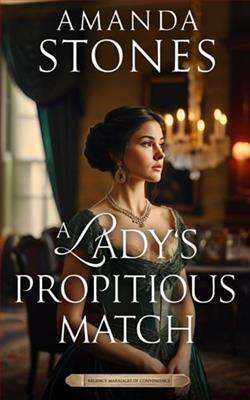
Amanda Stones' A Lady's Propitious Match is a captivating exploration of love, societal expectations, and the quest for personal fulfillment. Set against the backdrop of Regency-era England, the novel deftly weaves a tale of forbidden romance that challenges the rigid norms of class and duty. Through the lens of Lady Clara Belmont and Christopher Fitzhugh's burgeoning relationship, Stones crafts a narrative that is both engaging and thought-provoking, inviting readers to ponder the complexities of love and the courage it takes to defy convention.
At the heart of the novel is Lady Clara Belmont, a character who embodies the struggle between personal desires and societal obligations. As the daughter of an earl, Clara is expected to secure a prestigious marriage, yet her true passion lies in the world of art. Stones skillfully portrays Clara's internal conflict, capturing her yearning for creative expression and the frustration of being paraded before suitors who value her title more than her intellect. Clara's character development is a testament to Stones' ability to create a relatable and multi-dimensional protagonist. Her journey from a dutiful daughter to a woman who dares to pursue her own happiness is both inspiring and empowering.
Christopher Fitzhugh, the novel's male lead, is equally compelling. As a second son, Christopher is not burdened with the same expectations as his elder brother, yet he faces his own set of challenges. His desire to establish a creative tutoring business is at odds with his mother's matchmaking schemes, which aim to secure a beneficial marriage alliance. Christopher's character is a refreshing departure from the typical Regency hero; he is neither a rake nor a brooding aristocrat, but rather a man of ambition and integrity. His interactions with Clara are marked by a genuine connection that transcends societal barriers, and their chemistry is palpable from their first meeting.
The novel's central theme of forbidden love is explored with nuance and depth. Stones delves into the societal constraints that dictate the lives of her characters, highlighting the sacrifices they must make to adhere to or defy these expectations. The fake courtship between Clara and Christopher serves as a clever narrative device, allowing them to navigate the complexities of their relationship while maintaining the facade of propriety. This arrangement, however, becomes increasingly untenable as their feelings deepen, leading to a poignant exploration of the tension between duty and desire.
Stones' writing is both elegant and evocative, capturing the essence of the Regency period with vivid descriptions and authentic dialogue. Her attention to detail immerses readers in the world of high society balls, drawing rooms, and country estates, while also providing a critical lens on the era's social mores. The novel's pacing is well-balanced, with moments of introspection and emotional intensity interspersed with scenes of lighthearted banter and romantic tension.
In comparison to other works in the genre, A Lady's Propitious Match stands out for its emphasis on character development and thematic depth. While it shares similarities with novels such as Julia Quinn's Bridgerton series, which also explores the intricacies of love and societal expectations, Stones' novel offers a more introspective and nuanced portrayal of its protagonists' inner lives. The focus on artistic passion and personal autonomy adds an additional layer of complexity, setting it apart from more conventional Regency romances.
The novel's supporting characters are well-drawn and contribute to the richness of the narrative. Clara's parents, though initially portrayed as traditionalists, are revealed to have their own motivations and desires, adding depth to their roles. Christopher's mother, with her relentless matchmaking, provides both comic relief and a foil to the protagonists' aspirations. These characters, along with a host of other society figures, create a vibrant tapestry that enhances the story's authenticity.
Ultimately, A Lady's Propitious Match is a testament to the power of love to transcend societal boundaries and the courage required to pursue one's true path. Stones' exploration of these themes is both timeless and timely, resonating with readers who have ever felt constrained by external expectations. The novel's conclusion, while satisfying, leaves room for reflection on the nature of happiness and the sacrifices it may entail.
In conclusion, Amanda Stones has crafted a compelling and beautifully written novel that will appeal to fans of historical romance and those seeking a story with emotional depth and resonance. A Lady's Propitious Match is a celebration of love's ability to defy convention and the enduring quest for personal fulfillment. It is a book that will linger in the minds of readers long after the final page is turned, inviting them to consider the ways in which they, too, might forge their own propitious matches in life.



