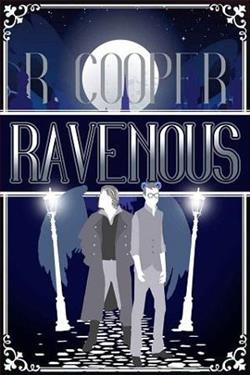
R. Cooper's Ravenous is a captivating exploration of identity, desire, and the complexities of self-acceptance, set against the backdrop of a fantastical world where the boundaries between the ordinary and the extraordinary blur. This novel is a compelling addition to the fantasy genre, offering readers a unique blend of magic, introspection, and emotional depth.
At the heart of Ravenous is Nicodemus, an asterion who is both endearing and deeply relatable. Nicodemus is a character who embodies the struggle of living on the fringes of society, marked by his ram’s horns—a physical manifestation of his connection to the mysterious Realm. His journey is one of self-discovery and acceptance, as he navigates the challenges of being different in a world that often fears what it does not understand. Cooper skillfully crafts Nicodemus as a protagonist who is both vulnerable and resilient, making his internal conflicts and desires palpable to the reader.
The novel’s setting, the Arawn Agency, serves as a sanctuary for the peculiari—those who have returned from the Realm with newfound abilities and insights. This setting is rich with potential, offering a microcosm of society where the peculiar and the mundane coexist. Cooper’s world-building is subtle yet effective, allowing readers to immerse themselves in a universe where magic is both a gift and a burden. The Realm itself is shrouded in mystery, its influence felt throughout the narrative as a source of both danger and allure.
One of the novel’s most intriguing aspects is its exploration of desire and the concept of the “rut” that Nicodemus experiences. This twice-a-year phenomenon is a metaphor for the universal human experience of longing and the fear of vulnerability. Cooper handles this theme with sensitivity and nuance, using it as a vehicle to delve into Nicodemus’s psyche and his interactions with others. The rut is not merely a plot device but a profound commentary on the nature of desire and the lengths to which individuals will go to fulfill their needs while maintaining their dignity.
Bel, the enigmatic and powerful peculiari, serves as both a foil and a catalyst for Nicodemus’s transformation. His presence in the story is magnetic, and his relationship with Nicodemus is complex and layered. Bel’s understanding of the Realm and its temptations positions him as a mentor figure, yet his own motivations and desires add an element of unpredictability to the narrative. Cooper’s portrayal of Bel is masterful, as he embodies the duality of strength and vulnerability, making him a compelling character in his own right.
The dynamic between Nicodemus and Bel is central to the novel’s emotional core. Their interactions are charged with tension and unspoken longing, reflecting the broader themes of connection and isolation. Cooper excels in crafting dialogue that is both poignant and revealing, allowing readers to witness the gradual unraveling of Nicodemus’s defenses. The evolution of their relationship is a testament to Cooper’s ability to depict complex emotional landscapes with authenticity and grace.
In terms of thematic depth, Ravenous delves into the notion of self-acceptance and the courage required to embrace one’s true self. Nicodemus’s journey is emblematic of the struggle to reconcile one’s identity with societal expectations and personal fears. Cooper’s narrative is a powerful reminder of the importance of self-compassion and the transformative power of understanding and acceptance.
Comparatively, Ravenous shares thematic similarities with works such as Patrick Rothfuss’s The Name of the Wind and Neil Gaiman’s Neverwhere, where the protagonists grapple with their identities in worlds that are both familiar and fantastical. However, Cooper’s focus on the intimate and personal aspects of desire and identity sets Ravenous apart, offering a fresh perspective within the genre.
Overall, Ravenous is a beautifully crafted novel that resonates on multiple levels. R. Cooper’s ability to weave together elements of fantasy, romance, and introspection results in a story that is both enchanting and thought-provoking. The novel’s exploration of desire, identity, and the human condition is executed with a deft touch, making it a standout addition to the fantasy genre. For readers seeking a narrative that is as emotionally rich as it is imaginative, Ravenous is a must-read.
In conclusion, R. Cooper’s Ravenous is a testament to the power of storytelling to illuminate the complexities of the human experience. Through Nicodemus’s journey, readers are invited to reflect on their own desires and the courage it takes to embrace one’s true self. It is a novel that lingers in the mind long after the final page is turned, leaving a lasting impact that is both profound and deeply satisfying.



