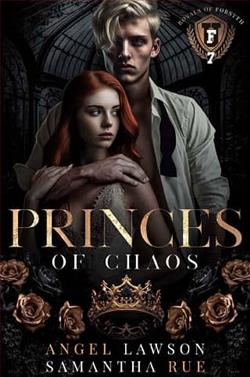
Angel Lawson's Princes of Chaos is a compelling exploration of power dynamics, societal expectations, and personal agency, set against the backdrop of a dystopian world where lineage and legacy dictate one's worth. The novel's blurb sets the stage for a story that is as much about survival and identity as it is about romance and intrigue. With its unique premise and complex characters, Lawson crafts a narrative that is both engaging and thought-provoking.
At the heart of the story is the protagonist, a young woman from the West End who finds herself thrust into the opulent yet perilous world of East End royalty. Her journey begins with an invitation to a masked ball, a seemingly innocuous event that quickly spirals into a life-altering experience. The protagonist's initial skepticism about the invitation reflects a broader theme of class disparity and the unexpected opportunities that can arise from it. Her decision to attend the ball, despite her reservations, speaks to her resilience and desire to carve out a place for herself in a world that has consistently undervalued her.
The novel's central theme revolves around the concept of being a "vessel" for the next great heir. This notion is both literal and metaphorical, as the protagonist grapples with the expectations placed upon her body and her role within the royal hierarchy. Lawson deftly explores the tension between personal autonomy and societal obligation, creating a narrative that is as much about self-discovery as it is about fulfilling one's duty. The protagonist's journey is marked by moments of introspection and defiance, as she navigates the complexities of her new role and the men who have been chosen to accompany her.
The three princes—Whitaker, Pace, and Lex—are each distinct in their personalities and motivations, providing a rich tapestry of character development that adds depth to the story. Whitaker, with his charming facade and hidden vulnerabilities, embodies the duality of appearance versus reality. His interactions with the protagonist reveal layers of complexity that challenge the traditional archetype of the "Prince Charming." Pace, on the other hand, is driven by a deep-seated grudge, his every action colored by a desire for retribution. His character serves as a reminder of the past's inescapable influence on the present, adding an element of suspense to the narrative.
Lex, the moody and ambitious student, offers a different perspective on the protagonist's journey. His clinical approach to their relationship underscores the novel's exploration of love and intimacy as both a scientific and emotional endeavor. The dynamic between Lex and the protagonist is fraught with tension, as they navigate the boundaries of their connection and the expectations placed upon them. Lawson's portrayal of these relationships is nuanced and multifaceted, highlighting the complexities of human interaction in a world where power and control are paramount.
One of the novel's strengths lies in its ability to balance the fantastical elements of its setting with the raw, emotional realities of its characters. The palace, with its dungeons and hockey rinks, serves as a metaphor for the dual nature of the princes' existence—trained to excel and endure, yet bound by the constraints of their roles. This juxtaposition is mirrored in the protagonist's journey, as she learns to navigate the intricacies of her new life while maintaining her sense of self.
Lawson's writing is both evocative and immersive, drawing readers into a world that is at once familiar and foreign. Her attention to detail and ability to craft vivid imagery enhance the story's impact, creating a reading experience that is both captivating and thought-provoking. The novel's pacing is well-executed, with moments of tension and introspection balanced by scenes of action and intrigue.
In comparison to other works within the genre, Princes of Chaos stands out for its unique blend of romance, suspense, and social commentary. Fans of authors like Sarah J. Maas and Victoria Aveyard will find much to appreciate in Lawson's exploration of power and identity, as well as her ability to create complex, relatable characters. The novel's themes of autonomy and agency resonate with contemporary readers, offering a fresh perspective on the traditional "princess" narrative.
Overall, Princes of Chaos is a compelling addition to the world of dystopian romance, offering a narrative that is both entertaining and thought-provoking. Angel Lawson's ability to weave together themes of power, identity, and love creates a story that is as engaging as it is insightful. For readers seeking a novel that challenges conventions and explores the intricacies of human relationships, Princes of Chaos is a must-read.



